




What's Happening?
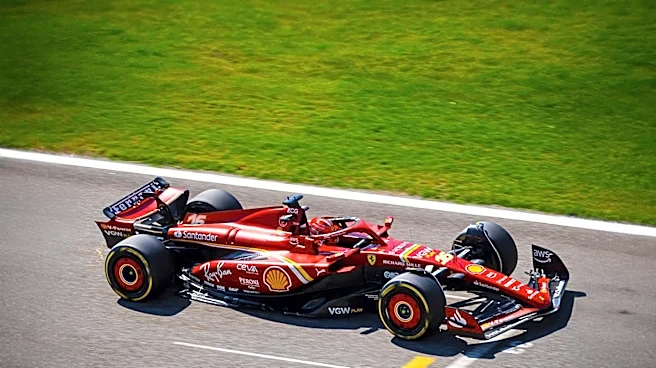
Ferrari is implementing significant technical changes to its SF-26 car in preparation for the Monza Grand Prix. These modifications include a new floor and diffuser specification, which debuted at the Dutch GP, and a revised approach to low-drag aerodynamics.
The team is also considering introducing its ADUO 2 engine specification, which represents a partial step in its internal combustion engine development. This new engine, if introduced, would coincide with the addition of the fourth internal combustion engine and turbocharger to each driver's pool for the season. The goal is to optimize the car's performance for Monza's high-speed characteristics, which traditionally favor outright power and aerodynamic efficiency. Ferrari's strategy involves adapting individual components of the car, including the floor, to reduce overall drag rather than relying solely on traditional low-downforce wing configurations.
Why It's Important?
These technical upgrades are crucial for Ferrari's performance in the Formula 1 season, particularly as they aim for success at their home race in Monza. The introduction of the ADUO 2 engine could provide a power boost, which is vital for Monza's long full-throttle sections. The aerodynamic revisions, especially the focus on floor design for drag reduction, indicate a sophisticated approach to maximizing speed while maintaining necessary downforce. For the U.S. racing audience and automotive enthusiasts, Ferrari's continuous innovation in Formula 1 showcases cutting-edge engineering that often trickles down into road car development, influencing future automotive technologies and performance standards. The competitive nature of Formula 1 drives advancements in engine efficiency, aerodynamics, and material science, which have broader implications for the automotive industry.
What's Next?
Ferrari's final decision on introducing the ADUO 2 engine at Monza is pending, but it remains a strong possibility given the circuit's characteristics and the team's power unit management strategy. Following Monza, Ferrari plans to introduce a revised lateral floor edge later in the season, with a window stretching from Baku in late September to Austin a month later. These ongoing developments suggest a continuous effort to refine the SF-26's aerodynamic platform throughout the season. The performance at Monza will be a key indicator of the effectiveness of these upgrades and could influence the team's strategy for the remaining races, potentially impacting the championship standings for drivers like Lewis Hamilton and Charles Leclerc.
Beyond the Headlines
The strategic timing of these upgrades highlights the intricate balance between performance gains and regulatory constraints in Formula 1, particularly concerning engine component limits. Ferrari's decision to prioritize floor modifications for drag reduction over conventional wing changes reflects a deeper understanding of aerodynamic principles and their application in modern F1 cars. This approach could set a precedent for other teams in optimizing their car designs for specific track conditions. Furthermore, the pressure to perform at home races like Monza often pushes teams to accelerate development, showcasing the intense competitive environment and the constant pursuit of marginal gains that define top-tier motorsport. The technological advancements made in F1, driven by such competitive pressures, frequently contribute to broader engineering knowledge and innovation.