





What's Happening?
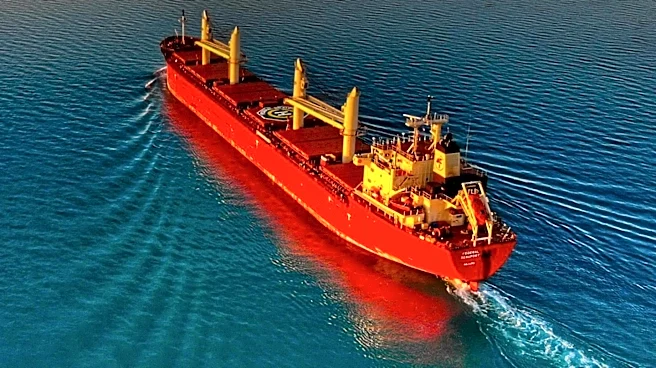
Vitol Bunkers has announced the successful completion of Singapore's first bio-bunkering operation using Very Low Sulphur Fuel Oil (VLSFO) co-processed with Cashew Nutshell Liquid (CNSL). The operation involved supplying the 2024-built bulker Scion Mathilda
with 246.5 metric tons of this co-processed fuel. The vessel then completed a voyage from Asia to Northern Europe and South America without any operational issues, consuming 34.1 metric tons of the CNSL-blended VLSFO. This test demonstrated a greenhouse gas (GHG) reduction of at least 120 tons CO2eq compared to conventional VLSFO, proving that significant emissions savings can be achieved without altering vessel operations or requiring additional onboard handling. CNSL, a byproduct of cashew processing, is highlighted as an underutilized and scalable marine biofuel component.
Why It's Important?
This successful bio-bunkering trial marks a significant step forward for the U.S. and global maritime industry in its efforts to decarbonize. The use of CNSL as a scalable and operationally viable marine biofuel component offers a promising pathway to reduce greenhouse gas emissions in shipping, a sector that contributes substantially to global emissions. By demonstrating that such biofuels can be integrated into existing supply chains and used without operational disruptions, it provides a practical solution for shipowners and operators looking to meet environmental regulations and sustainability goals. This innovation could accelerate the adoption of alternative fuels, fostering a greener maritime economy and potentially influencing U.S. shipping policies and investments in sustainable bunkering infrastructure.
What's Next?
The successful proof of concept is expected to encourage further exploration and adoption of CNSL-blended biofuels within the maritime sector. Vitol and Olam Agri will likely continue to promote this solution, potentially leading to more widespread trials and commercial deployment. The focus will be on scaling up the production and supply of CNSL-based biofuels to meet growing demand. This could also spur research and development into other underutilized bio-products for marine fuel applications. Regulatory bodies and industry stakeholders will be closely watching these developments, which may influence future international and national maritime emissions standards and incentives for sustainable shipping practices.
Beyond the Headlines
The use of cashew nutshell liquid as a marine biofuel highlights the potential of circular economy principles in industrial sectors. By repurposing an agricultural waste product, the initiative not only reduces emissions but also creates new value streams for agricultural byproducts. This approach could inspire similar innovations in other industries, promoting resource efficiency and waste reduction on a larger scale. Furthermore, the successful integration of this biofuel without operational changes underscores the importance of 'drop-in' solutions for rapid decarbonization in hard-to-abate sectors like shipping. It also points to the growing collaboration between energy companies, agricultural businesses, and shipping lines in addressing global climate challenges, fostering a more interconnected and sustainable industrial ecosystem.