
What's Happening?
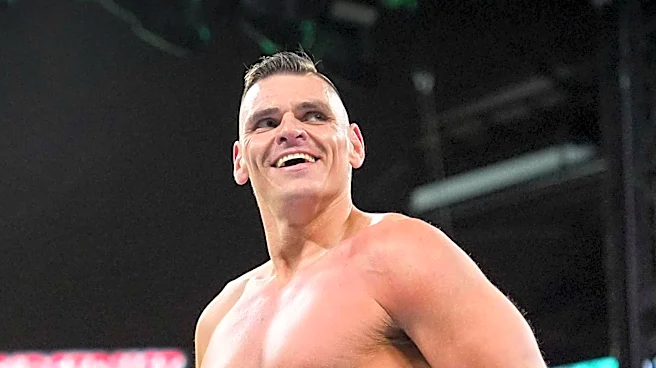
Mason Rook, a rising star in WWE's NXT brand, recently shared his admiration for the earlier, heavier version of fellow WWE wrestler Gunther, formerly known as WALTER. In an interview on Busted Open Radio, Rook stated that he found Gunther more 'menacing'
when he was bigger and heavier, expressing a desire to emulate that imposing presence. Rook, who debuted in NXT in April, views Gunther as a benchmark in professional wrestling and aspires to face him at WrestleMania, specifically envisioning a match against Gunther in his former, more physically dominant form. This sentiment highlights Rook's respect for Gunther's career trajectory and his own ambitions within WWE. Gunther, a two-time World Heavyweight Champion and the longest-reigning Intercontinental Champion, underwent a significant physical transformation, losing over 50 pounds before his main roster call-up in 2022. Despite Gunther's current success, Rook's comments suggest a particular appreciation for the power and intimidation associated with Gunther's previous physique.
Why It's Important?
This development is significant for the professional wrestling industry, particularly within WWE, as it showcases the evolving narratives and character dynamics among its talent. Mason Rook's public challenge and specific preference for a past version of Gunther could ignite a compelling storyline, potentially leading to a high-profile match at a major event like WrestleMania. Such a feud would not only elevate Rook's profile but also add depth to Gunther's character, exploring themes of transformation, legacy, and the perception of power in wrestling. For fans, it offers an intriguing 'what if' scenario, pitting a rising star against a dominant champion, with an added layer of historical context regarding Gunther's physical evolution. This kind of narrative can drive fan engagement, increase viewership for NXT and main roster programming, and contribute to the long-term storytelling that is crucial for WWE's success. It also underscores the importance of physical presence and character presentation in professional wrestling, as Rook's comments directly address the impact of Gunther's physique on his perceived menace and inspiration.
What's Next?
Following Mason Rook's public statements, the immediate next steps will likely involve how WWE's creative team chooses to acknowledge or integrate these comments into ongoing storylines. Rook recently became the number one contender for the NXT Championship, indicating his rising prominence within the brand. A potential main roster call-up for Rook could accelerate a direct confrontation with Gunther. The expressed desire for a WrestleMania match suggests a long-term goal, which could be built through a series of interactions, verbal challenges, or even indirect confrontations between the two wrestlers. Gunther's response to Rook's comments, whether through interviews, social media, or in-ring promos, will be crucial in shaping the narrative. This could lead to a storyline where Gunther either dismisses Rook's preference or uses it as motivation, potentially leading to a clash that tests both wrestlers' physical and mental fortitude. The dynamic could also explore the idea of a 'past vs. present' challenge, adding a unique dimension to their potential rivalry.
Beyond the Headlines
Beyond the immediate wrestling storyline, Mason Rook's comments touch upon broader themes within professional sports and entertainment regarding body image, performance, and audience perception. Gunther's decision to lose weight was a strategic move for his main roster career, demonstrating the pressures and expectations placed on athletes to adapt their physiques for broader appeal and perceived athleticism. Rook's preference for the 'heavier' Gunther highlights a segment of the audience, and even fellow performers, who appreciate a different kind of physical dominance and intimidation. This could spark discussions within the wrestling community about the ideal wrestler physique, the impact of physical transformations on a performer's character, and the diverse preferences of the fanbase. It also subtly underscores the psychological aspect of wrestling, where a performer's presence and perceived threat are as important as their in-ring ability. The narrative could explore the idea that true menace comes not just from physical size but from an inherent intensity, regardless of body composition.