



What's Happening?
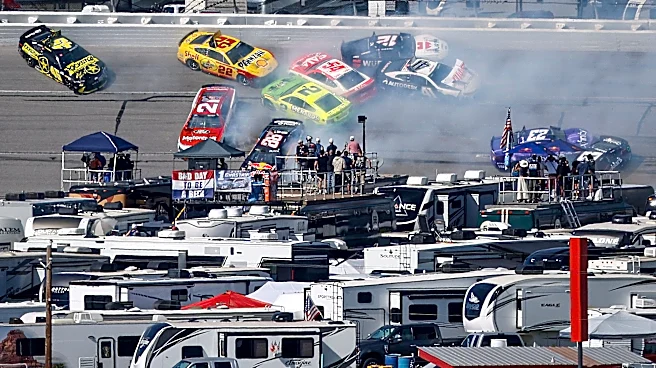
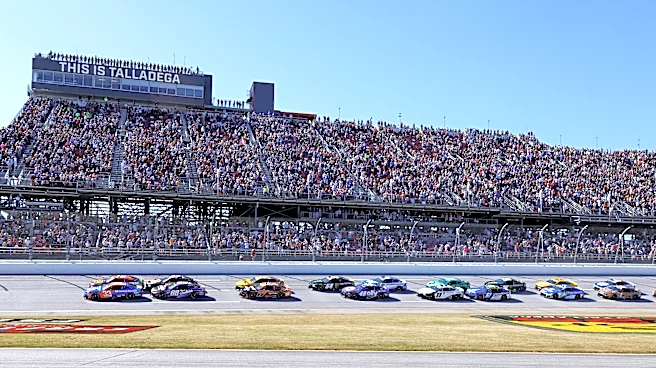
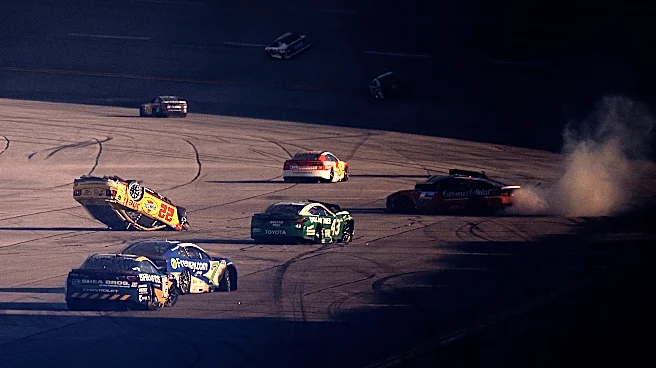
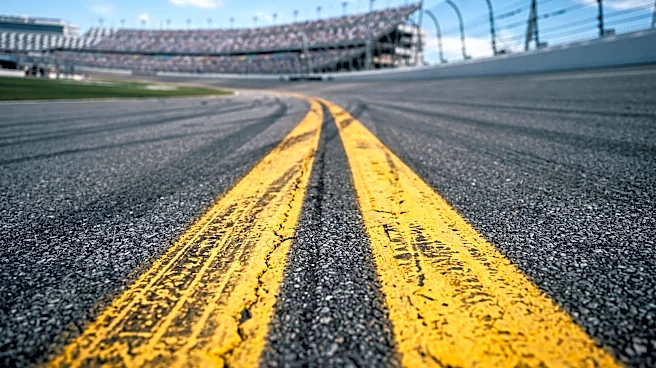
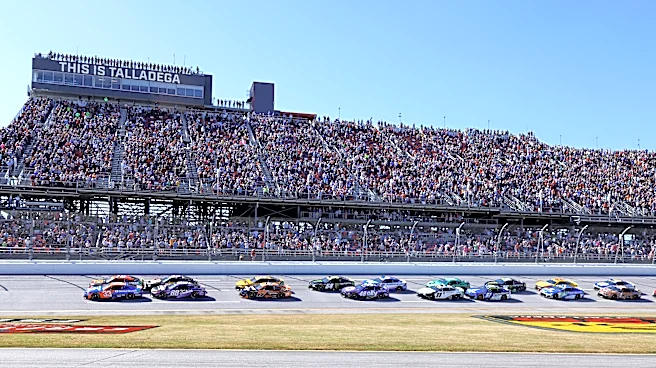
NASCAR driver Denny Hamlin has publicly criticized the sanctioning body for what he perceives as inconsistent enforcement of the double-yellow line rule, particularly following recent events at Talladega. Hamlin, speaking on his 'Actions Detrimental'
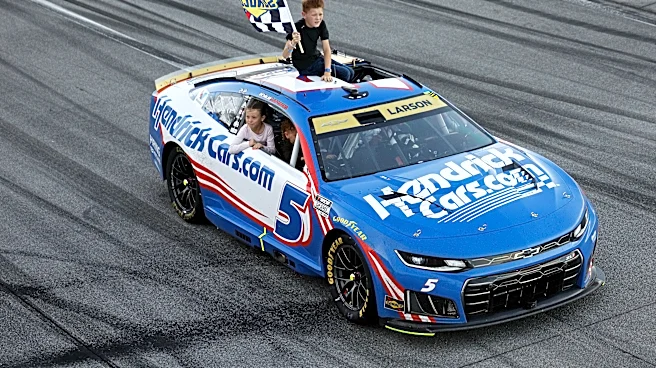
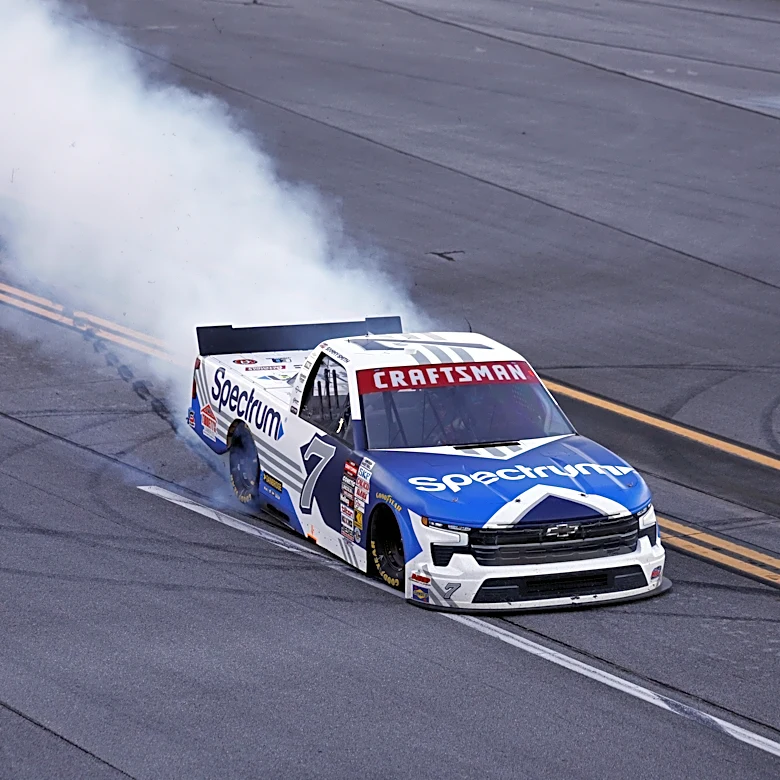
podcast, highlighted a specific incident involving Austin Hill, who he claims clearly went below the yellow line. He noted that the official rulebook lacks specific details, such as the number of tires required to be below the line for a violation. While agreeing with NASCAR's decision not to penalize Kyle Larson for his last-lap move, Hamlin questioned the broader application of the rule across different drivers and situations. He suggested that officials should differentiate between a driver voluntarily going below the line and being forced there by another competitor, as both scenarios are covered by the current regulations.
Why It's Important?
The consistent application of rules is crucial for maintaining fairness and integrity in competitive sports like NASCAR. Hamlin's criticism underscores a significant concern among drivers and fans regarding officiating transparency and predictability. Inconsistent rulings can lead to a perception of bias or arbitrary decision-making, potentially eroding trust in the sport's governing body. This issue is particularly impactful in high-stakes races where a single penalty or lack thereof can determine the outcome and championship standings. For drivers, ambiguity in rules creates uncertainty, affecting their race strategies and willingness to push limits. For NASCAR, a lack of clear and consistently applied rules can lead to ongoing controversies, detracting from the on-track action and potentially impacting fan engagement and the sport's overall reputation.
What's Next?
Denny Hamlin has proposed a straightforward solution: eliminate the double-yellow line restriction entirely to promote 'no holds barred racing.' While it remains uncertain if NASCAR will consider such a drastic change, Hamlin's vocal stance puts pressure on the sanctioning body to address the perceived inconsistencies. NASCAR may need to clarify its rulebook, provide more detailed explanations for its decisions, or review its enforcement protocols to ensure greater uniformity. The ongoing debate could lead to discussions among drivers, teams, and officials about potential rule modifications or clearer guidelines for interpretation. The outcome of these discussions will likely influence future race outcomes and how drivers approach superspeedway racing, especially in critical moments.
Beyond the Headlines
The controversy surrounding the double-yellow line rule extends beyond mere technicalities; it touches upon the fundamental balance between aggressive racing and safety, and the role of officiating in a high-speed sport. The subjective interpretation of whether a driver was 'forced' below the line or did so voluntarily highlights the inherent challenges in real-time decision-making during chaotic race finishes. This situation also brings to light the broader issue of how sports organizations communicate and adapt their rules in response to evolving competitive dynamics and technological advancements in data analysis. The debate could spark a deeper conversation about the philosophy of racing rules—whether they should be strictly black and white or allow for more nuanced, 'case-by-case' judgments, and how such judgments impact the spirit of competition and fan perception.