







What's Happening?
Lagos State Governor, Babajide Sanwo-Olu, has reaffirmed Lagos's role as Nigeria's commercial gateway and a key driver of economic growth. Speaking at the Lagos Executive Business Breakfast Meeting organized by the Nigerian-British Chamber of Commerce
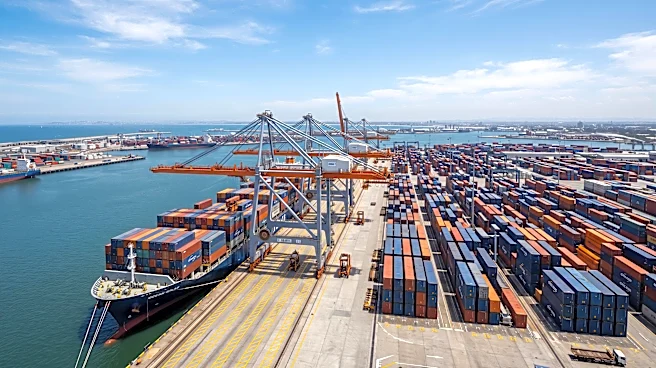
(NBCC) in Lekki, Lagos, Governor Sanwo-Olu outlined the administration's commitment to the Lagos State Development Plan 2052. This long-term blueprint, comprising 447 initiatives across 21 strategic sectors, aims to position Lagos as Africa’s model megacity and a globally competitive economic and financial hub. The plan focuses on four major pillars: a thriving economy, a human-centered city, modern infrastructure, and effective governance. The Governor stated that Lagos aims to grow its economy to nearly one trillion dollars by 2052, emphasizing the need for sustained investment in infrastructure, technology, human capital, and business-friendly policies. He highlighted improved port efficiency, technological innovation, and increased investment as factors boosting manufacturing, job creation, and economic activity nationwide. The state's budget has reportedly grown from approximately ₦700 billion in 2019 to ₦4.2 trillion in 2026, reflecting expanding investment needs and the importance of improved revenue generation.
Why It's Important?
The ambitious target of a $1 trillion GDP by 2052 for Lagos underscores a significant economic development strategy that could have far-reaching implications for Nigeria and the broader African continent. As Nigeria's commercial hub, Lagos's economic growth directly impacts national economic stability and prosperity. The focus on infrastructure development, technological innovation, and human capital investment is crucial for attracting foreign direct investment and fostering a competitive business environment. If successful, this plan could elevate Lagos's status as a global economic player, potentially drawing in U.S. businesses looking for emerging markets and investment opportunities in sectors like technology, manufacturing, and logistics. The emphasis on strengthening support for small and medium-sized enterprises (SMEs) through financing and grants, alongside developing a skilled workforce, could create a more robust and diversified economy, reducing reliance on traditional sectors. This initiative could also serve as a model for other developing economies seeking to achieve sustainable growth and attract international partnerships.
What's Next?
The Lagos State Development Plan 2052 will continue to guide the state's economic policies and investment strategies. Governor Sanwo-Olu's administration is expected to further implement initiatives aimed at improving port efficiency, fostering technological innovation, and attracting increased investment. The state will likely continue to strengthen support for SMEs and focus on developing a skilled workforce to meet the demands of emerging industries. Collaboration with organizations like the Nigerian-British Chamber of Commerce will be crucial in promoting trade and investment relations. Future efforts will also involve showcasing key economic drivers such as the Lekki Deep Sea Port, industrial developments, and the growing technology and creative sectors to potential investors. The administration will also need to focus on improving revenue generation to sustain the ambitious development goals outlined in the plan.
Beyond the Headlines
The pursuit of a $1 trillion GDP by Lagos by 2052 represents more than just an economic target; it signifies a strategic vision for urban development and regional leadership. This long-term blueprint, with its focus on a 'human-centered city' and 'effective governance,' suggests an integrated approach to growth that considers social welfare alongside economic expansion. The success of this plan could set a precedent for sustainable development in rapidly urbanizing regions, addressing challenges such as infrastructure strain, job creation, and social equity. The emphasis on technology and innovation also points to a potential shift towards a knowledge-based economy, which could attract a new generation of talent and investment. However, achieving such an ambitious goal will require overcoming significant hurdles, including political stability, regulatory consistency, and effective resource management, all of which will be closely watched by international observers and potential investors.