






What's Happening?
Under Armour announced a 7% decrease in its fiscal second-quarter revenue, totaling $1.2 billion. The athletic apparel company also revised its full-year gross margin outlook downwards. This decline is attributed to several factors, including reduced
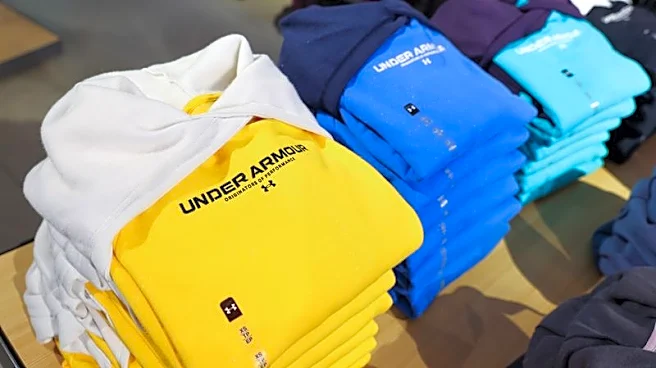
store traffic, increased inventory markdowns, and higher freight costs. Sales performance was particularly weak in key international markets, with revenue falling 9% in both Europe, the Middle East, and Africa (EMEA), and Asia Pacific regions. North American revenue also saw a 7% decline, impacted by pressure on direct-to-consumer traffic and softer wholesale sell-through. Despite these challenges, Under Armour has maintained its fiscal 2027 revenue and adjusted earnings forecasts. President and CEO Kevin Plank stated that the company is focusing on strategic initiatives such as streamlining product offerings, enhancing marketing coordination, and boosting full-price sales to stabilize its largest market, North America. The company's adjusted operating income for the quarter was $25 million, exceeding its internal outlook.
Why It's Important?
This financial report from Under Armour highlights significant headwinds facing the athletic apparel industry, particularly in competitive markets like North America and EMEA. The revenue decline and revised gross margin outlook signal potential challenges for the company's profitability and market share. Weaker store traffic and increased discounting suggest a shift in consumer spending habits or heightened competition from rivals. The company's strategy to focus on fewer products and more coordinated marketing indicates an effort to regain brand relevance and pricing power, which is crucial for long-term growth. The performance of a major player like Under Armour can also serve as an indicator for the broader retail sector, suggesting potential pressures on consumer discretionary spending and the impact of supply chain costs. Investors and industry observers will be closely watching whether these strategic adjustments can reverse the current sales trajectory and improve financial performance in the coming quarters.
What's Next?
Under Armour anticipates continued challenges in the near term, projecting an approximate 8% to 9% decline in revenue for the fiscal third quarter. The company expects adjusted operating results for Q3 to range from a $5 million loss to a $5 million profit. For the full fiscal year, Under Armour still expects revenue to decline at a mid-single-digit rate, with North American sales potentially falling slightly more than previously anticipated, though this is factored into the overall outlook. The company plans to reduce its product SKUs by nearly 50% from 2024 levels and has already removed over 60% of materials to concentrate resources on stronger products. Upcoming product launches include the Tech Helix shirt in November and the Armour Short in December, which will be available on Under Armour's website and at DICK'S Sporting Goods stores. These initiatives aim to improve inventory alignment with sales and drive full-price purchases, with a stronger fourth quarter anticipated to support the full-year outlook.
Beyond the Headlines
Under Armour's current struggles reflect broader shifts in consumer behavior and the retail landscape. The emphasis on 'fewer products, more coordinated marketing, and stronger full-price sales' suggests a strategic pivot away from a volume-driven approach towards a more premium, brand-focused model. This could lead to a more curated product offering and a stronger brand identity, potentially appealing to a more discerning customer base. However, executing such a shift effectively requires significant investment in marketing and product innovation to differentiate from competitors. The company's decision to expand its youth apparel licensing arrangement with Centric Brands also indicates a move towards optimizing its business model and potentially leveraging partnerships for growth in specific segments. This could free up internal resources to focus on core performance apparel and footwear, while still maintaining a presence in the youth market through licensing agreements.