





What's Happening?
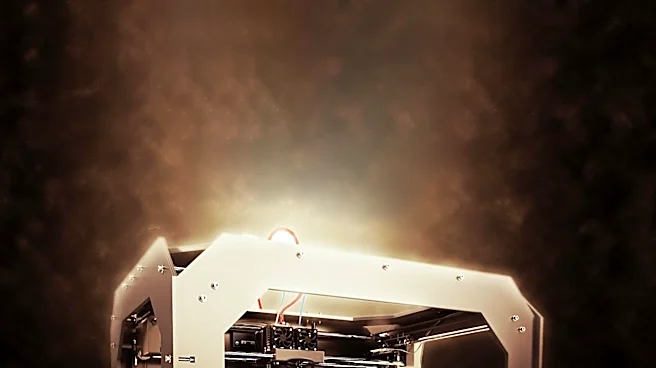
Multi Jet Fusion (MJF) is an industrial powder-bed 3D printing process that is being utilized to create functional polymer parts. This additive manufacturing technique involves spreading a thin layer of polymer powder, typically nylon PA12, across a build
area. Printing agents are then applied to specific regions where the part is to form, followed by the application of thermal energy to fuse these selected areas. This process is repeated layer by layer until the entire part is complete. After the printing phase, the parts undergo a cooling period, followed by removal from the powder cake, cleaning, and finishing processes such as bead blasting. A key advantage of MJF is its ability to produce complex geometries, including internal channels and lattice-like features, without the need for conventional support structures, as the surrounding powder provides the necessary support. This technology is particularly beneficial for product developers requiring strong prototype parts, complex designs, short lead times, and flexibility for small-batch production before committing to traditional tooling methods.
Why It's Important?
The advancement of MJF 3D printing technology holds significant importance for U.S. industries, particularly in manufacturing and product development. Its capability to rapidly produce functional nylon prototypes allows companies to accelerate their design iteration cycles, reducing the time and cost associated with bringing new products to market. Industries such as robotics, automotive, medical devices, and consumer electronics can leverage MJF for creating components, housings, jigs, fixtures, and enclosures. The ability to manufacture complex geometries efficiently opens up new possibilities for innovative product designs that might be challenging or impossible with traditional manufacturing methods. Furthermore, the flexibility for small-batch production makes MJF an attractive option for specialized components or customized products, catering to niche markets and reducing inventory risks. This technology can enhance the competitiveness of U.S. manufacturers by enabling faster innovation, more efficient prototyping, and the production of high-performance, customized parts.
What's Next?
The continued adoption and refinement of MJF technology are expected to lead to broader applications across various U.S. manufacturing sectors. As the technology matures, there may be an expansion in the range of compatible materials beyond PA12 nylon, offering greater versatility for engineers and designers. Research and development efforts will likely focus on improving surface finishes, expanding color options, and potentially scaling up the build volumes to accommodate larger parts. The integration of MJF into more comprehensive rapid prototyping and low-volume manufacturing workflows will become more seamless, further streamlining the transition from digital design to physical product. Additionally, as the cost-effectiveness of MJF improves, it could become a more viable option for selected low-volume end-use parts, depending on specific loading, environmental, inspection, and regulatory requirements. The demand for skilled MJF operators and finishers will also likely increase, driving job creation in advanced manufacturing.
Beyond the Headlines
Beyond its immediate industrial applications, MJF 3D printing has deeper implications for the future of manufacturing and supply chains in the U.S. The ability to produce parts on-demand and locally can reduce reliance on complex global supply chains, offering greater resilience against disruptions. This localized production capability could also foster a resurgence of domestic manufacturing, creating new economic opportunities and skilled jobs. Ethically, the technology promotes sustainable manufacturing practices by reducing material waste through its powder-bed process, where unused powder can often be recycled. Culturally, MJF contributes to a shift towards a more agile and responsive manufacturing paradigm, where customization and rapid innovation are prioritized. This could lead to a greater emphasis on design thinking and engineering creativity, as the constraints of traditional manufacturing are lessened. The long-term impact could include a more decentralized manufacturing landscape, empowering smaller businesses and innovators to bring their ideas to fruition more efficiently.