






What's Happening?
The American Public Power Association (APPA), Large Public Power Council (LPPC), and Transmission Access Policy Study Group (TAPS) have submitted comments to the Federal Energy Regulatory Commission (FERC), advocating for the approval of the North American Electric
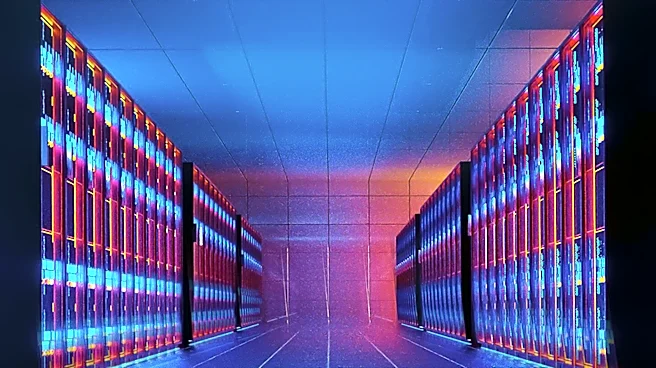
Reliability Corporation's (NERC) proposed registration criteria for computational loads. These groups emphasize that large computational loads, such as data centers, can significantly impact bulk-power system reliability due to their size, electrical characteristics, and operational behavior. The proposed criteria aim to register owners and operators of Computational Load Sites with a total connected load of at least 50 megawatts, supplied at a voltage level of 100 kilovolts or greater. The organizations urge FERC to approve these criteria while clarifying that such approval does not broaden the definition of the 'bulk-power system' or identify other entities as users subject to registration.
Why It's Important?
The approval of NERC's registration criteria for computational loads is critical for maintaining the reliability and stability of the U.S. bulk-power system. As data centers and other high-demand computational facilities proliferate, their energy consumption patterns and operational characteristics pose new challenges to grid management. By registering these entities, NERC can subject them to enforceable reliability standards, mitigating potential risks to the power grid. This move ensures that the entities directly impacting the bulk-power system are held accountable for their operational practices. For the energy sector, this means increased oversight and potentially new compliance requirements for large computational load operators. The clarification sought by APPA, LPPC, and TAPS is also vital to prevent unintended expansions of regulatory scope, ensuring that the focus remains on entities with material reliability impacts without inadvertently reclassifying other electricity consumers as 'bulk-power system users.'
What's Next?
FERC will review the comments from APPA, LPPC, and TAPS, along with other stakeholder input, before making a decision on NERC's petition for approval of its registration criteria. If approved, owners and operators of computational load sites meeting the specified thresholds (50 MW connected load, 100 kV voltage level) will be subject to registration and subsequent compliance with NERC's reliability standards. This will likely lead to increased scrutiny of their electrical infrastructure and operational protocols. The outcome will also set a precedent for how future large-scale, energy-intensive loads are integrated into the national grid framework. The ongoing dialogue between regulatory bodies, industry associations, and power system operators will continue to shape the regulatory landscape for emerging energy demands, particularly those driven by technological advancements.
Beyond the Headlines
This initiative reflects a broader trend of adapting energy regulations to keep pace with technological evolution. The rapid expansion of digital infrastructure, exemplified by data centers, is fundamentally altering energy demand profiles, necessitating a more granular and proactive regulatory approach. The debate over the definition and scope of the 'bulk-power system' highlights the challenges of applying existing legal frameworks to new and evolving energy consumers. This could lead to future discussions about how to categorize and regulate other types of large, non-traditional energy loads. Furthermore, the emphasis on reliability standards for computational loads underscores the interconnectedness of digital infrastructure and critical national energy systems, suggesting that disruptions in one could have cascading effects on the other. This development could also spur innovation in energy management solutions for large-scale computational facilities, promoting more efficient and grid-friendly operations.