








What's Happening?
Andrés Muñoz, the treasurer of Panama's National Chamber of Freight Transport (CANATRACA), has provided insights into the sophisticated methods employed by cargo theft gangs in Costa Rica. These criminal organizations often operate with multiple vehicles,
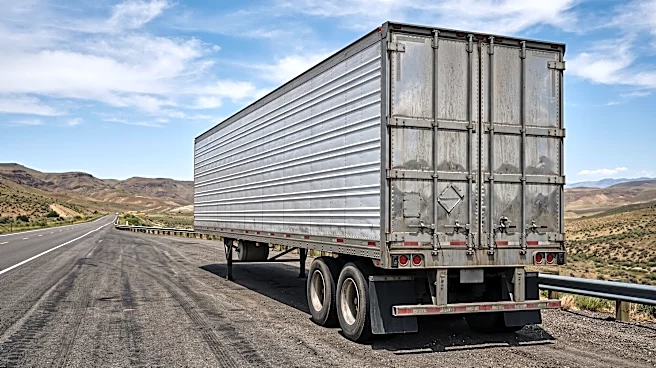
strategically 'boxing in' trucks on highways. Once a truck is stopped, drivers are typically restrained, gagged, and confined to the sleeper cab before being moved to one of the gang's cars and abandoned. The gangs then abscond with the trailer and its valuable cargo. Muñoz emphasized that these are not random acts but rather professional operations, with thieves often possessing driving skills comparable to or exceeding those of the original truck drivers. The stolen merchandise, which can include high-value items like electronics, clothing, and alcohol, is then funneled into informal markets where it is resold at significantly reduced prices, sometimes less than half the retail value. This illicit trade has led to substantial financial losses for transporters, with trailers alone costing up to $14,000 if not recovered.
Why It's Important?
The detailed account from Andrés Muñoz highlights a significant and growing threat to the commercial transportation sector in Central America, particularly impacting U.S. businesses that rely on these supply chains. The professional nature of these cargo theft gangs, coupled with their access to sensitive customs information, creates a high-risk environment for goods transiting through Costa Rica. This situation directly affects the cost of doing business, as companies are forced to invest in expensive private security, increasing transportation costs by up to 25% per container. The prevalence of cargo theft also leads to delays, as drivers avoid night travel, extending delivery times for routes that once took three to four days to up to six. Ultimately, these disruptions can impact the availability and pricing of goods in U.S. markets, as businesses may pass on increased security and loss costs to consumers. The erosion of trust within the transport sector, as some clients suspect complicity from trucking companies, further complicates logistics and could lead to a shift in shipping routes, potentially favoring less efficient but more secure maritime options.
What's Next?
The ongoing challenge of cargo theft in Costa Rica, as detailed by Andrés Muñoz, suggests a continued need for enhanced security measures and international cooperation. Transport companies are likely to further invest in GPS trackers and convoy systems, though gangs are adapting with signal jammers and tactics to split convoys. There is an urgent need for Costa Rican authorities to address the vulnerabilities in customs information systems, which gangs exploit to identify high-value targets. While Costa Rica has increased prison penalties for receiving stolen merchandise, the persistence of the illicit resale market indicates that enforcement and broader economic solutions are still required. Stakeholders, including U.S. businesses operating in the region, will likely continue to pressure local governments for more effective policing and judicial responses to protect their assets and ensure the smooth flow of trade. Without significant improvements, the trend of increased costs, delays, and potential rerouting of goods will likely persist.
Beyond the Headlines
The insights from Andrés Muñoz reveal a deeper issue beyond mere theft: the sophisticated criminal infrastructure that underpins cargo robbery in Costa Rica. The gangs' ability to access customs data, their professional driving skills, and their organized resale networks point to a well-established illicit economy. This situation raises ethical questions about data security within government systems and the potential for corruption that allows such information to be leaked. Culturally, the pervasive fear among truck drivers, who face not only financial loss but also physical violence and even death, highlights a breakdown of public safety and trust in the region. The economic implications extend to the informal markets where stolen goods are fenced, creating a parallel economy that undermines legitimate businesses and tax revenues. This cycle of crime, fueled by demand for cheap goods, poses a long-term challenge to economic development and stability in Central America, potentially impacting international trade relations and investment in the region.