







What's Happening?
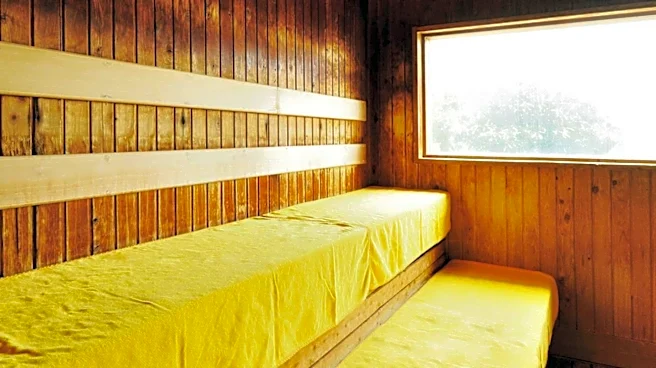
Saunas are increasingly becoming social hubs, displacing traditional venues like bars as places for connection in U.S. cities such as New York. This trend, dubbed 'social sauna,' involves communal heat rooms designed for interaction and shared wellness
experiences. Establishments like New York's Othership, which combines communal saunas with ice baths and breathwork, and The Altar on Fifth Avenue, planning a 50-person sauna, are leading this movement. These spaces aim to foster meaningful social interaction in a restorative, alcohol-free environment. The concept extends to 'sauna raves' and 'Melt Sessions,' where heat therapy is paired with curated music and guided steam journeys, transforming DJs into hosts. This shift is seen as a response to a loneliness epidemic and a generation moving away from alcohol-centric nightlife, seeking more authentic and health-conscious ways to socialize.
Why It's Important?
The rise of social saunas represents a significant cultural and lifestyle shift in the U.S., particularly among younger generations seeking alternative forms of social engagement. This trend impacts the wellness industry by expanding the definition of 'spa' and 'health club' to include communal, interactive experiences. For urban planning and real estate, it could influence the design and purpose of public and commercial spaces, with a greater emphasis on wellness-oriented gathering places. Economically, it creates new business models within the luxury wellness sector, as resorts and members' clubs redesign sauna rooms to encourage conversation and treat them as social anchors. This movement also addresses public health concerns related to loneliness and alcohol consumption by offering restorative, community-focused alternatives, potentially leading to improved mental and physical well-being for participants.
What's Next?
The social sauna trend is expected to continue growing, with more dedicated facilities and integrated wellness centers emerging in major U.S. cities. We may see further innovation in the types of experiences offered, such as themed sessions, workshops, and collaborations with other wellness practices like meditation or yoga. The success of these ventures could encourage traditional hospitality businesses to incorporate similar communal wellness elements. As the concept gains traction, there might be increased investment in research to understand the psychological and social benefits of shared heat therapy. This trend could also influence the design of residential buildings and community centers, integrating social sauna spaces to foster a sense of community and well-being among residents. The emphasis on alcohol-free social settings could also lead to a broader re-evaluation of social norms and leisure activities.
Beyond the Headlines
The emergence of social saunas points to a deeper societal yearning for authentic connection and a rejection of superficial interactions in an increasingly digital world. It highlights a desire for 'restorative' social experiences that leave individuals feeling energized rather than drained. This trend also reflects a growing consciousness around health and well-being, where social activities are integrated with self-care practices. The communal aspect of saunas, traditionally a solitary ritual, transforms them into spaces for vulnerability and genuine human interaction, potentially fostering stronger community bonds. Ethically, it raises questions about inclusivity and accessibility, ensuring these wellness spaces are available to diverse populations. Culturally, it signifies a re-imagining of leisure and social life, where health and connection are intertwined, moving beyond the traditional bar scene to embrace more mindful and enriching forms of gathering.