



What's Happening?
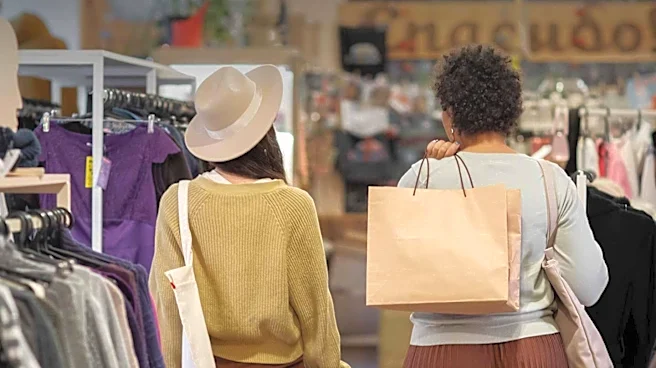
Gen Z is increasingly choosing thrifted and secondhand fashion over traditional luxury brands. This shift is attributed to several factors, including the rising prices of luxury goods, a desire for individuality, and the significant influence of social
media platforms like TikTok. TikTok has transformed thrifting into a popular activity, showcasing it as a hunt, a styling class, a budget hack, and a means of personal expression. The resale market is experiencing substantial growth, with reports indicating that secondhand fashion is outpacing new clothing sales by a 2-to-1 margin. Gen Z and Millennials are projected to drive 70% of this growth. This trend allows young shoppers to build unique looks that signal taste rather than just wealth, moving away from logo-heavy, new-season pieces.
Why It's Important?
This consumer behavior shift has profound implications for the U.S. fashion industry. Luxury brands are facing a challenge to their cultural relevance and sales, as Gen Z consumers view high prices as 'distasteful' and question the value of new luxury goods. The rise of thrifted fashion promotes sustainability by extending the life cycle of clothing and reducing waste, aligning with growing environmental concerns. This trend also fosters creativity and individuality in style, moving away from mass-produced fashion. For retailers, it highlights the increasing importance of the secondhand market and the need to adapt to evolving consumer values. The influence of social media in shaping these trends means that brands must engage with digital platforms to understand and respond to consumer preferences effectively.
What's Next?
The secondhand fashion market is expected to continue its expansion, potentially leading to more sophisticated resale platforms and increased investment from traditional retailers in circular fashion initiatives. Luxury brands may need to re-evaluate their pricing strategies and marketing approaches to appeal to Gen Z's values, possibly by emphasizing craftsmanship, heritage, or unique experiences rather than just brand recognition. Social media platforms will likely remain central to the thrifting movement, with creators continuing to share tips, hauls, and styling advice. This could also lead to a greater focus on upcycling and DIY fashion, further empowering consumers to personalize their wardrobes. The long-term impact could be a more sustainable and diverse fashion landscape, where individuality and ethical consumption are highly valued.
Beyond the Headlines
The embrace of thrifted fashion by Gen Z goes beyond mere economic considerations; it reflects a deeper cultural shift. It signifies a rejection of fast fashion's disposability and luxury's exclusivity, favoring a more conscious and personalized approach to consumption. This movement challenges the traditional notions of status and value, suggesting that authenticity and unique style are more prized than overt displays of wealth. The community aspect fostered by TikTok around thrifting also highlights a desire for shared knowledge and creative expression. This trend could contribute to a broader re-evaluation of consumer culture, encouraging more mindful purchasing decisions and a greater appreciation for items with history and character.