
What's Happening?
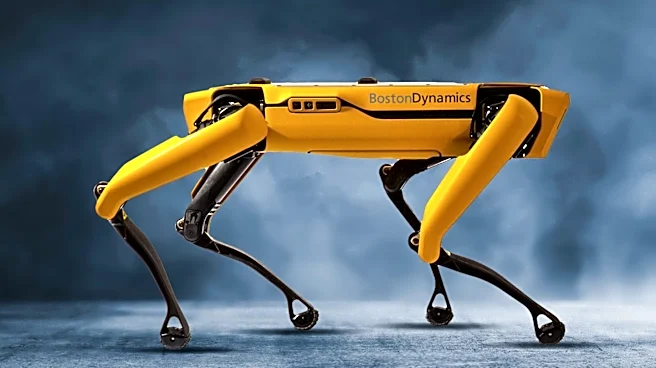
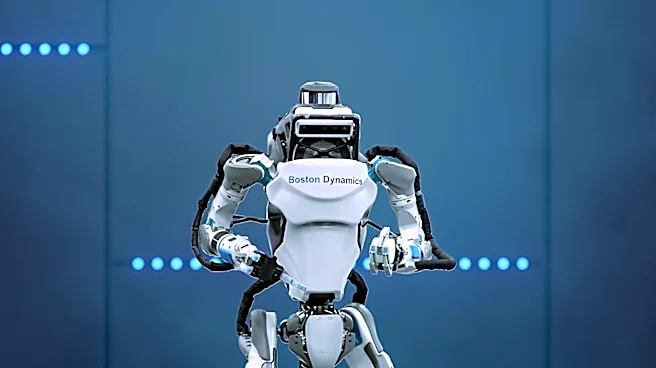
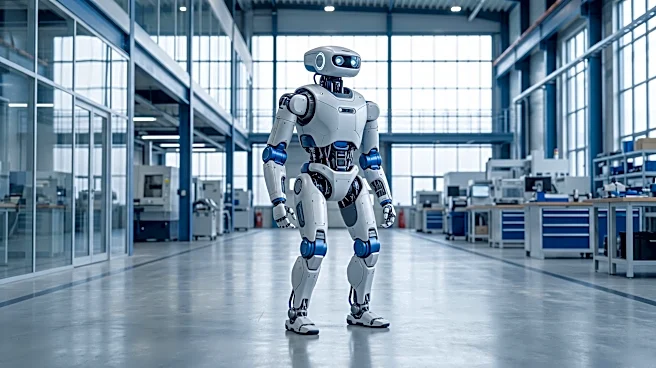
U.S. robot maker Boston Dynamics has partnered with GlobalFoundries to deploy its humanoid robot, Atlas, and quadruped robot, Spot, in the contract manufacturer's chip fabrication plants. This collaboration
marks Atlas's first application outside the automotive industry and represents a new frontier for robotics in semiconductor manufacturing. While the number of Atlas units, specific tasks, and timeline for routine operations remain undisclosed, the partnership aims to explore the humanoid robot's potential in this sector. Spot robots, which have been operational at GlobalFoundries' Burlington, Vermont facility for over four years, will also see expanded deployment across the company's fabrication plants in New York, Vermont, Germany, and Singapore. Existing Spot deployments in Singapore have already demonstrated high efficiency, traveling nearly 560 miles and completing over 90,000 inspections in sterile cleanrooms with a 99% success rate since April.
Why It's Important?
This partnership signifies a crucial step in the broader application of advanced robotics beyond traditional industrial settings. For Boston Dynamics, it represents a move beyond its existing relationship with owner Hyundai, showcasing Atlas's versatility and potential across various industries. For GlobalFoundries, the project aligns with its roadmap toward AI-enabled manufacturing, aiming to enhance efficiency and potentially reduce operational costs in the highly complex and sensitive environment of chip fabrication. The deployment of Atlas, though currently experimental, could pave the way for more widespread adoption of humanoid robots in manufacturing, addressing labor shortages and improving precision in critical processes. However, Gartner analyst Bill Ray notes that the deal appears more experimental than a significant shift, highlighting challenges such as battery life, component durability, and the safety considerations associated with larger, AI-driven robots like Atlas, whose behavior may not always be predictable.
What's Next?
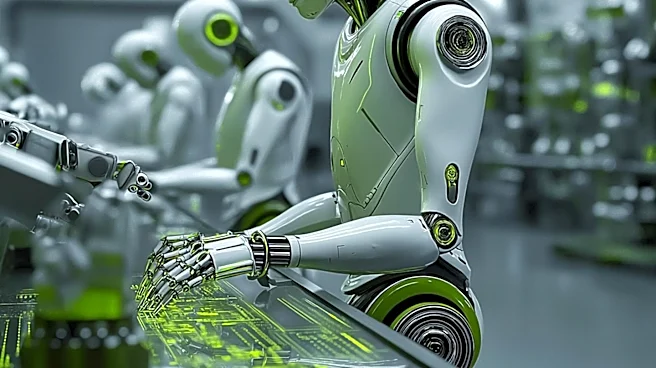
Atlas testing at GlobalFoundries' facilities is scheduled to commence in early 2027. The initial phase will involve a skills development workshop focused on evaluating potential use cases for the humanoid robot, assessing its readiness for integration, and training it to perform specific tasks within the semiconductor manufacturing environment. The partners have not yet disclosed details regarding the number of Atlas units involved or the exact tasks they will undertake. The success of these trials will be critical in determining the future scalability and broader adoption of Atlas in semiconductor manufacturing and potentially other industries. The expansion of Spot robots across GlobalFoundries' global facilities will continue, building on their proven track record in inspection and monitoring tasks.
Beyond the Headlines
The deployment of Atlas in semiconductor manufacturing raises important questions about the future of human-robot collaboration and the evolving nature of industrial automation. While the immediate focus is on efficiency and AI-enabled manufacturing, the long-term implications include potential shifts in workforce dynamics, the need for new safety protocols, and the ethical considerations surrounding increasingly autonomous and powerful robots. The challenges highlighted by Gartner analyst Bill Ray, such as the unpredictable behavior of AI systems and the practical limitations of battery life and component durability, underscore the ongoing need for rigorous testing and development. This initiative could accelerate research into more robust and reliable robotic systems, ultimately shaping the landscape of advanced manufacturing and potentially influencing how other high-tech industries approach automation and human-robot integration.