






What's Happening?
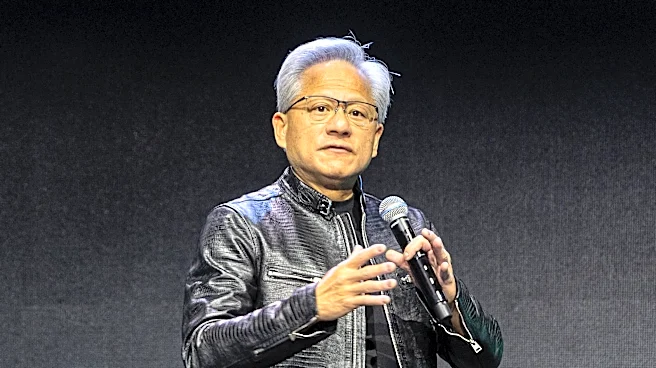
Alice Walton, heiress to the Walmart fortune, has surpassed Jensen Huang on Forbes’ Real-Time Billionaires List. This shift occurred after Nvidia's stock experienced an 8% decline, resulting in a reduction of over $10 billion from Huang's net worth. The
drop in Nvidia's stock followed a reinstatement bump, indicating market volatility affecting high-net-worth individuals tied to technology companies. Walton's rise on the list highlights the significant wealth held by individuals associated with established retail empires, contrasting with the more fluctuating fortunes often seen in the tech sector. The movement on the billionaires list reflects broader market dynamics and the performance of major corporations like Nvidia and Walmart.
Why It's Important?
This change in ranking on Forbes' Real-Time Billionaires List is significant as it illustrates the dynamic nature of wealth accumulation and loss among the world's wealthiest individuals. Jensen Huang's fortune, heavily tied to Nvidia, demonstrates how quickly market fluctuations in the technology sector can impact personal wealth. Conversely, Alice Walton's position, rooted in the more stable retail giant Walmart, underscores the enduring power of traditional industries. This shift can influence perceptions of economic stability and investment strategies, as investors may observe the relative resilience of different sectors. It also highlights the ongoing competition and shifts in economic power between established industries and rapidly evolving technological sectors.
What's Next?
The future positions of Alice Walton and Jensen Huang on Forbes' Real-Time Billionaires List will largely depend on the continued performance of Walmart and Nvidia, respectively. Nvidia's stock performance will be a key factor for Huang, with any further significant drops or gains directly impacting his net worth. Similarly, Walmart's market performance and broader retail trends will influence Walton's standing. Economic analysts will likely monitor these companies closely as indicators of sector-specific health and overall market sentiment. Future shifts could also be influenced by broader economic conditions, technological advancements, and consumer spending patterns, all of which play a role in the valuations of these major corporations.
Beyond the Headlines
Beyond the immediate financial implications, this shift in billionaire rankings reflects deeper economic trends. It highlights the ongoing interplay between the 'old economy' represented by retail giants like Walmart and the 'new economy' driven by technology companies such as Nvidia. The volatility experienced by tech billionaires like Huang, whose wealth is often concentrated in a single, high-growth company, contrasts with the more diversified and stable wealth of heirs like Walton. This dynamic raises questions about wealth concentration, market speculation, and the long-term sustainability of fortunes built on rapidly evolving technological innovations versus those founded on established consumer markets. It also subtly underscores the different risk profiles associated with various wealth-generating sectors.