




What's Happening?
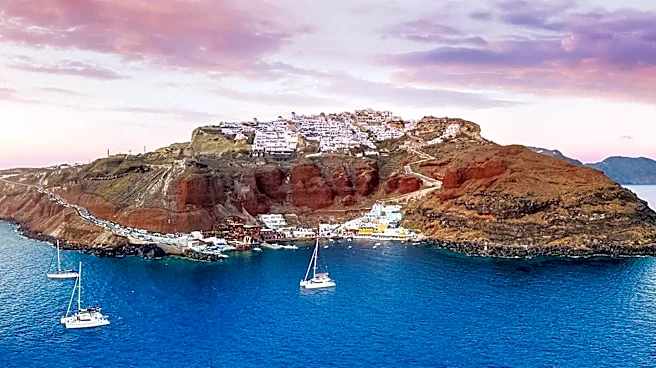
The Greek island of Anafi, located east of Santorini, is being highlighted as a peaceful and less crowded travel destination. While Santorini faces issues of high demand and visitor limits, Anafi offers unspoiled golden beaches, traditional Greek architecture,
and a quiet village atmosphere. Despite lacking an airport or major roads, it is accessible by ferry and is described as delightfully walkable. The island maintains a serene environment even during peak summer months, with local businesses, including tavernas and bus services, typically operating through October. Temperatures in September can reach up to 27 degrees Celsius, making it an attractive option for those seeking a sun-soaked escape without the throngs of tourists found on more popular Greek islands. Anafi's Kalamos Rock, towering 460 meters, adds to its dramatic landscape, and its main village, Chora, is known for its car-free ambiance and family-run establishments.
Why It's Important?
The increasing popularity and subsequent overcrowding of renowned tourist destinations like Santorini have led to visitor limits and rising costs, impacting the travel experience. The emergence of alternatives like Anafi provides a model for sustainable tourism, offering travelers authentic cultural experiences and natural beauty without the negative effects of mass tourism. This shift can help redistribute tourist traffic, supporting the economies of lesser-known regions while preserving the charm and tranquility that initially attracted visitors to Greece. For the U.S. travel industry, promoting such destinations could cater to a growing segment of travelers seeking unique, off-the-beaten-path experiences, potentially diversifying travel packages and reducing reliance on over-saturated locations. It also highlights a broader trend in global tourism towards more responsible and immersive travel, moving away from purely commercialized hotspots.
What's Next?
As awareness of quieter alternatives grows, destinations like Anafi may see an increase in visitor numbers, though likely at a more manageable pace due to their inherent accessibility limitations. Local authorities and tourism boards might focus on promoting the island's unique selling points, such as its untouched landscapes and authentic local culture, to attract travelers seeking a peaceful retreat. There could be continued efforts to ensure that any increase in tourism is sustainable, preserving the island's character and natural environment. Travelers planning trips to Greece will likely consider these less crowded options, especially during shoulder seasons like September and October, to enjoy favorable weather and fewer crowds. The success of Anafi as an alternative could also encourage the promotion of other similar hidden gems across the Greek islands.
Beyond the Headlines
The trend of seeking out 'quiet islands' like Anafi reflects a deeper desire among travelers for authenticity and a connection with nature, moving beyond the curated experiences of mainstream tourist hubs. This shift challenges the conventional tourism model that often prioritizes volume over visitor experience and local well-being. It also raises questions about the long-term sustainability of popular destinations and the potential for over-tourism to erode the very qualities that make a place attractive. The appeal of Anafi, with its emphasis on untouched landscapes and local life, suggests a growing appreciation for destinations that offer a sense of discovery and tranquility, fostering a more intimate and respectful form of travel. This could lead to a re-evaluation of tourism development strategies globally, encouraging a focus on preserving local character and environmental integrity.