
What's Happening?
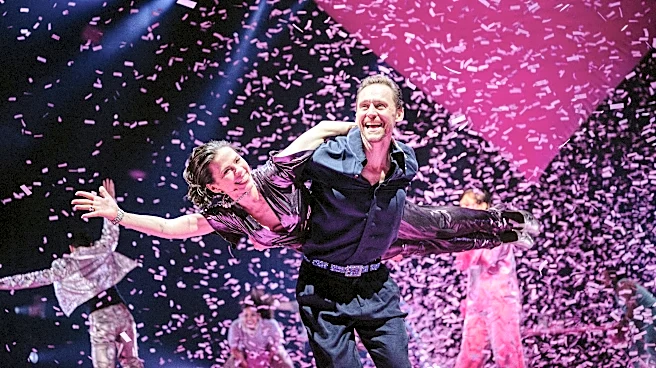
Jamie Lloyd's production of William Shakespeare's 'Much Ado About Nothing' has opened at the Winter Garden Theater, featuring Tom Hiddleston and Hayley Atwell in the lead roles. The production, which previously
ran in London, is described as a stripped-down, modernized interpretation of the classic comedy. Lloyd's staging incorporates contemporary elements, including pop music sound design, confetti, and dynamic choreography by Fabian Aloise. The set, designed by Soutra Gilmour, resembles a dance club with perpetually falling pink confetti and a large heart balloon. Hiddleston and Atwell, reprising their roles as Benedick and Beatrice, engage with the audience directly and satirize their own Marvel Comics film personas. The cast also includes non-binary performer Mason Alexander Park as Margaret, who provides commentary through ironic pop songs, and Tim Steed as a reptilian Don John, portrayed as a repressed gay man. Extraneous characters and subplots, such as Dogberry and his retinue, have been removed to focus on the core narrative. The production runs from October 31, 2026, to January 10, 2027, with a running time of 2 hours and 20 minutes, including intermission.
Why It's Important?
This production of 'Much Ado About Nothing' is significant for its bold reinterpretation of a Shakespearean classic, demonstrating how traditional theater can be made relevant and engaging for modern audiences. Jamie Lloyd's approach, which infuses the play with contemporary sensibilities and visual flair, challenges conventional expectations of classical theater. The casting of prominent actors like Tom Hiddleston and Hayley Atwell, known for their roles in popular culture, helps attract a broader audience, bridging the gap between mainstream entertainment and classical drama. The inclusion of a non-binary performer and the portrayal of a character through a 'pansexual lens' reflect evolving societal discussions around identity and representation, pushing the boundaries of how classic texts are interpreted. This production's success could influence future theatrical adaptations, encouraging more innovative and inclusive approaches to classical works on Broadway and beyond, potentially revitalizing interest in Shakespeare among younger generations.
What's Next?
The run of 'Much Ado About Nothing' at the Winter Garden Theater is scheduled to conclude on January 10, 2027. The critical and audience reception of this modernized Shakespearean production will likely be closely watched by the theater community. Its success could pave the way for similar contemporary interpretations of classical plays on Broadway, potentially influencing future programming decisions by theater companies. The performances of Tom Hiddleston and Hayley Atwell, along with the innovative direction by Jamie Lloyd, may garner attention during awards season, further solidifying the production's impact. The discussions generated by its progressive themes and staging, particularly regarding gender and sexuality, are expected to continue, contributing to broader conversations about inclusivity in the arts. The production's ability to attract a diverse audience, including those familiar with the stars from their film work, could also inform marketing strategies for future theatrical endeavors.
Beyond the Headlines
Jamie Lloyd's 'Much Ado About Nothing' delves into deeper implications beyond its immediate theatrical success. By stripping down Shakespeare's text and infusing it with modern elements, the production raises questions about the timelessness of classic literature and its adaptability to contemporary contexts. The deliberate use of pop culture references, such as the actors' Marvel roles, blurs the lines between high art and popular entertainment, challenging traditional hierarchies in artistic consumption. The 'pansexual lens' and the casting of a non-binary performer are not just stylistic choices but reflect a growing demand for diverse representation and inclusive storytelling in mainstream theater. This production serves as a cultural touchstone, prompting audiences to reconsider the relevance of historical narratives and the evolving nature of theatrical interpretation. It also highlights the ethical considerations of adapting classic works to reflect modern values, balancing fidelity to the original text with the need for contemporary resonance and social commentary.