




What's Happening?
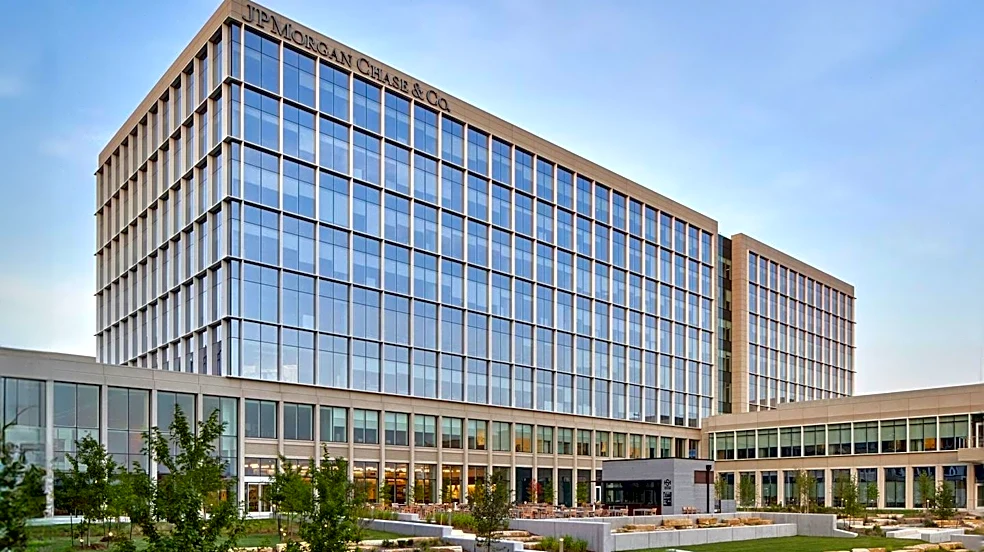
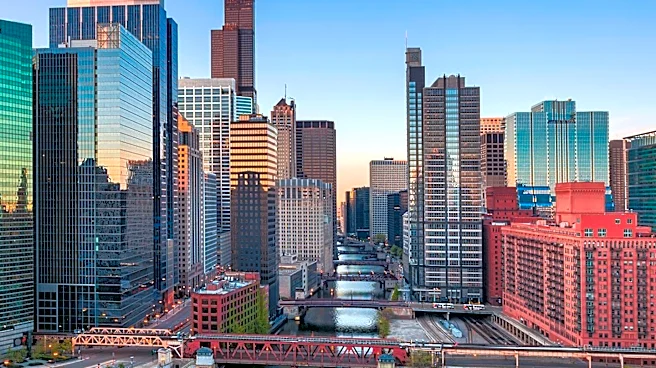
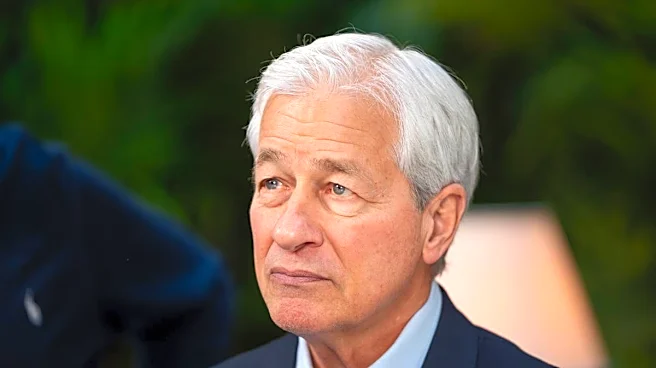
Jamie Dimon, Chairman and CEO of JPMorgan Chase, recently addressed the Economic Club of Chicago and toured the renovated Chase Tower, reflecting on his past in the city. Dimon, who previously led Bank One in Chicago before its acquisition by JPMorgan Chase, expressed
a preference for Chicago over New York. The bank is investing $800 million in a multi-year renovation of the 60-story Chase Tower, which is expected to be completed in late 2027. This investment underscores JPMorgan Chase's commitment to Chicago, where it employs approximately 15,000 people. Dimon also discussed broader economic concerns, including inflation, national debt, and geopolitical instability, while advocating for employees to return to the office five days a week, citing benefits for younger staff and overall company performance.
Why It's Important?
JPMorgan Chase's significant investment in the Chase Tower renovation and CEO Jamie Dimon's comments highlight several important trends in the U.S. business and economic landscape. The $800 million renovation signifies a major commitment to physical office spaces in an era of evolving work models, potentially influencing other corporations' decisions regarding remote work versus in-office presence. Dimon's strong stance on a five-day in-office work week, driven by concerns about 'decay in relationships, speed, innovation,' and the development of young employees, could set a precedent for other large financial institutions and businesses. Furthermore, Dimon's remarks on the 'uncertainty' of the current economic environment, including inflation and geopolitical risks, provide a key perspective from a leading financial figure, offering insights into potential challenges and strategies for navigating the U.S. economy. This impacts not only JPMorgan Chase but also the broader financial sector and the cities where these institutions operate.
What's Next?
The renovation of Chase Tower is slated for completion in late 2027, which will likely further solidify JPMorgan Chase's presence and operational capacity in Chicago. The bank's continued investment in its physical infrastructure, coupled with its CEO's firm stance on in-office work, suggests a potential long-term trend for corporate real estate and employee policies within the financial sector. Other companies may observe the outcomes of JPMorgan Chase's approach to office work and its impact on productivity and corporate culture. Economically, Dimon's expressed concerns about inflation and global instability indicate that businesses and policymakers will continue to grapple with these issues. His advocacy for supporting Western allies also suggests ongoing discussions about the U.S.'s role in global economic stability and its implications for domestic policy.
Beyond the Headlines
Beyond the immediate business and economic implications, Jamie Dimon's return to Chicago and his reflections on the city touch upon deeper themes of corporate identity and urban development. His personal preference for Chicago and the bank's substantial investment in the city's downtown core highlight the enduring importance of major urban centers as hubs for commerce and talent, even in an increasingly digital world. The debate over remote versus in-office work, championed by Dimon, also raises fundamental questions about the future of corporate culture, mentorship, and the social fabric of professional life. His philanthropic comments about 'smart philanthropy' that plants 'a seed that grows into a tree' rather than merely subsidizing, reflect a strategic approach to corporate social responsibility that seeks sustainable impact, potentially influencing how other corporations engage with community development and social investment.