




What's Happening?
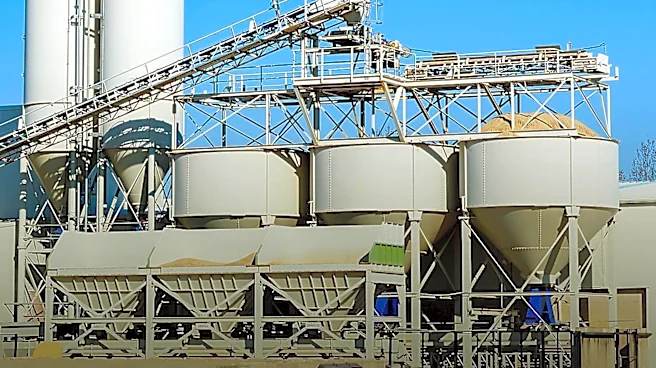
Cement plants are increasingly deploying cyclones as a first-stage unit for dust collection, primarily to remove coarse particles before the air stream reaches more advanced bag filters. A cyclone operates as a centrifugal separator, lacking filter media,
which contributes to its low cost and mechanical simplicity. High-speed dusty air enters tangentially, causing heavy coarse dust particles to be thrown against the wall and collected in a bottom hopper. This process effectively reduces the dust load on downstream bag filters, extending their service life and decreasing the frequency of cleaning cycles. While cyclones are efficient at removing coarse dust, they have limited capability in capturing fine particles and typically cannot meet modern emission standards when used alone. Therefore, they are often integrated into a two-stage system, working in conjunction with bag filters to achieve optimal performance and regulatory compliance.
Why It's Important?
The strategic use of cyclones in cement plants holds significant importance for both operational efficiency and environmental compliance within the U.S. industrial sector. By acting as a pre-separator, cyclones protect more sensitive and expensive bag filters from excessive wear caused by coarse dust, thereby reducing maintenance costs and extending the lifespan of critical equipment. This approach allows cement facilities to manage their budgets more effectively, as cyclones offer a lower capital investment and simpler operation compared to standalone bag filters. Furthermore, the combined system of cyclones and bag filters enables plants to meet stringent emission standards, which is crucial for environmental protection and avoiding regulatory penalties. This dual-technology strategy ensures that U.S. cement production can remain competitive while adhering to increasingly strict environmental regulations, benefiting both the industry and public health by reducing airborne particulate matter.
What's Next?
The trend of integrating cyclones with bag filters is expected to continue as cement plants seek to balance cost-effectiveness with environmental responsibility. Future developments may focus on enhancing the durability of cyclones, particularly in abrasive cement service, through improved materials and design to minimize wear on linings and shell components. Research and development could also explore ways to slightly improve the capture efficiency of fine particles in cyclones, even if they remain primarily pre-separators, to further reduce the burden on subsequent filtration stages. Additionally, as emission regulations evolve, there may be increased pressure for more sophisticated monitoring and control systems to ensure the combined cyclone-bag filter systems consistently meet or exceed compliance targets. This ongoing optimization will likely lead to more sustainable and economically viable dust collection solutions for the U.S. cement industry.
Beyond the Headlines
The adoption of cyclones in conjunction with bag filters in cement plants reflects a broader industrial shift towards modular and multi-stage pollution control strategies. This approach acknowledges that no single technology is a panacea for complex industrial emissions, and that combining different methods can yield superior results in terms of both efficiency and cost. Ethically, this strategy underscores a commitment to environmental stewardship, as it allows industries to operate while minimizing their ecological footprint. Economically, it promotes innovation in dust collection technologies and encourages manufacturers to develop more robust and efficient components. Culturally, it signifies a growing acceptance within heavy industries that environmental protection is not merely a regulatory burden but an integral part of sustainable business practices, influencing public perception and corporate responsibility standards across the U.S.