








What's Happening?
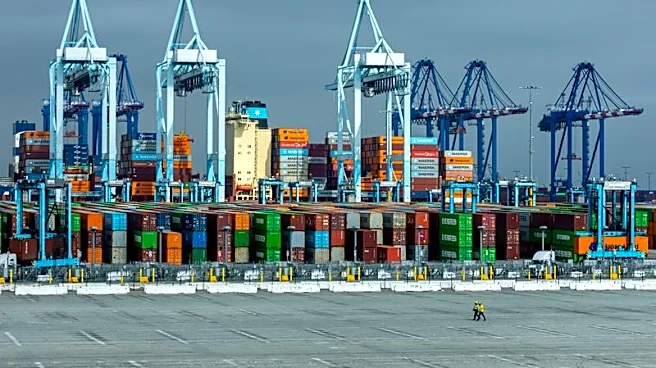
The logistics industry is experiencing a significant surge in activity as retailers rush to front-load inventory ahead of impending tariff deadlines. This has led to a notable increase in warehouse utilization and transportation activity, as reported
by the Logistics Managers’ Index (LMI), which rose above 70 for the first time since March 2022. The index, which measures inventory, warehousing, and transportation conditions, indicates significant expansion when above 70. Retailers are bringing in holiday goods earlier than usual to avoid potential new tariffs expected in late July. This has resulted in a 5.7-point increase in inventory levels and a 6.5-point rise in warehousing utilization, reaching its highest level since September 2022. However, warehousing capacity has decreased, slipping back into contraction, which is causing a squeeze in the market.
Why It's Important?
The current situation highlights a critical challenge for the logistics and retail sectors as they navigate the complexities of international trade and tariff policies. The rush to secure warehouse space is driving up costs, with warehousing prices increasing significantly. This trend could have broader economic implications, potentially affecting consumer prices and retail margins. The pressure on warehouse capacity is exacerbated by a slowdown in new construction, with current supply unable to meet the accelerating demand. This imbalance could lead to longer-term issues in the supply chain, affecting the availability and pricing of goods. Retailers and logistics companies may need to adapt their strategies to manage costs and ensure efficient distribution.
What's Next?
As the tariff deadlines approach, the logistics industry is likely to continue experiencing high demand for warehouse space. Companies may need to explore alternative solutions, such as optimizing existing space or investing in new facilities, to accommodate the increased inventory levels. The upcoming LMI report and updates from major real estate firms like Prologis will provide further insights into whether the current trends are temporary or indicative of a longer-term shift. Stakeholders will be closely monitoring these developments to make informed decisions about future investments and operational strategies.