







What's Happening?
A proposed rate increase for Cleveland Public Power (CPP) customers has been approved by the Utilities Committee and is now headed for a City Council vote. If passed, the new rates would take effect in January, potentially adding between $1.38 and $4.73
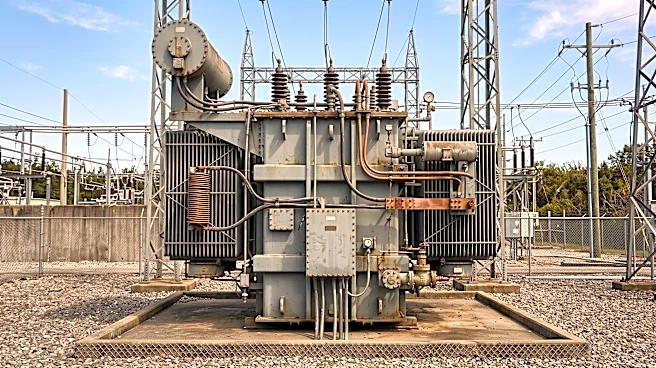
to monthly bills in winter and $1.26 to $5.23 in summer, with further increases planned for 2028 and 2029. While Ward 11 Council Member Nikki Hudson supported the 'very moderate' increase, she emphasized the need for the Bibb administration to demonstrate improved service reliability, particularly concerning tree limb trimming near electrical wires, which has contributed to outages. The additional revenue from the rate hike would enable CPP to borrow $30 million for system upgrades and fund nearly $70 million in capital spending over the next five years, with major investments planned for transformers and the West 41st Street substation. CPP's competitor, FirstEnergy Corp., is also seeking a rate increase.
Why It's Important?
This rate increase is critical for Cleveland Public Power to fund necessary infrastructure upgrades and improve service reliability, which has been a point of contention for residents experiencing outages. The ability to borrow $30 million and invest nearly $70 million in capital projects over five years is essential for modernizing an aging power system. However, the importance of this measure is intertwined with public trust and accountability. Council members' insistence on demonstrable service improvements highlights the challenge of balancing utility financial needs with consumer expectations for reliable and affordable power. The parallel rate hike sought by FirstEnergy Corp. indicates a broader trend of rising utility costs, which could impact household budgets across the region. The outcome of the City Council vote will determine the financial future of CPP's infrastructure and its capacity to meet customer demands.
What's Next?
The Cleveland City Council is expected to vote on the proposed Cleveland Public Power rate hike, potentially as early as tonight. If approved, the new rates will be implemented starting in January. Following the vote, the Bibb administration will face pressure to demonstrate tangible improvements in CPP's service, particularly in areas like tree trimming and outage response, to justify the increased costs to ratepayers. CPP plans to proceed with its nearly $70 million capital spending plan over the next five years, focusing on upgrades to transformers and the West 41st Street substation. The utility's ability to secure the $30 million in borrowed funds will depend on the approval of the rate increase. The ongoing discussions and actions by both CPP and FirstEnergy Corp. regarding rate adjustments will continue to shape the energy landscape and consumer costs in Cleveland.
Beyond the Headlines
The debate over Cleveland Public Power's rate increase extends beyond immediate financial implications, touching upon broader issues of urban infrastructure, public utility management, and environmental responsibility. The focus on tree trimming near electrical wires underscores the vulnerability of power grids to environmental factors and the importance of proactive maintenance. This situation also highlights the tension between public utilities' need for capital investment and the public's desire for affordable services. The comparison with FirstEnergy Corp.'s rate hike suggests a systemic challenge in funding utility infrastructure in the current economic climate. Ultimately, the decision will reflect the city's priorities regarding infrastructure resilience, consumer burden, and the long-term sustainability of its public services, potentially influencing future policy decisions on utility regulation and urban development.