





What's Happening?
A scientific review published in Biological Research has identified bovine milk derivatives and whey fractions as promising sustainable substitutes for fetal bovine serum (FBS) in cell cultivation. FBS has been a standard nutrient supplement since the
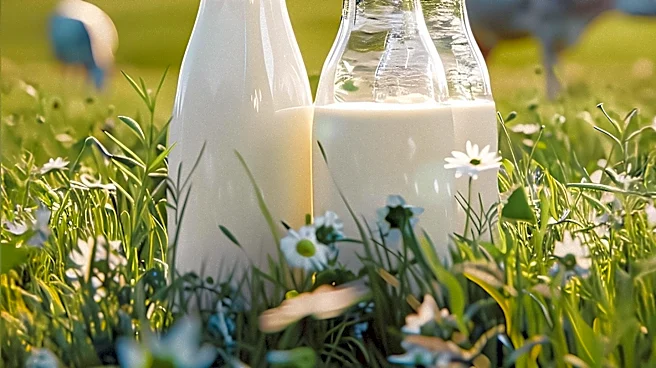
mid-20th century, but its use is increasingly scrutinized due to ethical concerns, supply chain unpredictability, and biological variability. The review highlights that milk derivatives offer a compositionally complete and scalable alternative, leveraging agricultural surplus. Milk contains essential components like fats, lactose, and proteins, with whey fractions being particularly rich in bioactive macromolecules such as beta-lactoglobulin, alpha-lactalbumin, and lactoferrin. These components have been shown to promote robust cell proliferation in various cell lines. The research aims to mitigate the structural liabilities associated with FBS, which include lot-to-lot composition disparities, potential viral contamination, and vulnerability to global market fluctuations. The study suggests that repurposing surplus milk through circular bioeconomy frameworks could reduce waste, lower manufacturing costs, and decrease reliance on FBS.
Why It's Important?
The shift towards sustainable alternatives for FBS has significant implications for the biomedical and cellular agriculture industries in the U.S. and globally. FBS is widely used in basic biological research, vaccine manufacturing, pharmaceutical toxicity screening, and recombinant protein production. Reducing reliance on FBS addresses ethical concerns related to its procurement, which involves unanesthetized cardiac puncture of bovine fetuses. Furthermore, it can stabilize supply chains, making research and production less vulnerable to market downturns, disease restrictions, and climate events that affect cattle populations. For U.S. biotechnology companies, adopting milk-derived media could lead to more consistent and cost-effective cell culture processes, enhancing reproducibility in scientific studies and streamlining regulatory oversight. This development also aligns with the 'Three Rs' framework (reduce, refine, replace) for animal experimentation, promoting more ethical and sustainable practices within the scientific community. The valorization of dairy waste into high-value cell culture supplements also presents an economic opportunity for the agricultural sector.
What's Next?
Despite the promising capabilities of milk-derived culture media, standardized processing protocols are required before widespread industrial adoption. The inherent variability in milk's biochemical composition, influenced by seasonal dairy diets, lactation stages, and maternal genetics, needs to be addressed to ensure batch-to-batch consistency. Future efforts will likely focus on developing robust purification and standardization methods for milk derivatives to meet the stringent requirements of cell culture applications. Research will also continue to explore entirely animal-free synthetic inputs, with milk derivatives serving as a transitional nutrient bridge. Establishing localized supply agreements, particularly in regions with dairy surpluses, could facilitate the conversion of retail dairy waste into certified cell culture supplements. This would not only reduce long-distance shipping emissions and food waste but also lower manufacturing overheads for biotechnology companies. Continued investment in research and development will be crucial to overcome current biological limitations and integrate these sustainable alternatives into mainstream cell culture practices.
Beyond the Headlines
The exploration of dairy milk derivatives as FBS alternatives extends beyond immediate scientific and economic benefits, touching upon broader ethical and environmental considerations. This initiative represents a move towards a more circular bioeconomy, transforming agricultural waste into valuable resources for advanced biotechnological applications. Ethically, it addresses the moral concerns surrounding the harvesting of FBS, promoting a more humane approach to scientific research and industrial production. Environmentally, repurposing surplus milk reduces food waste, minimizes the environmental footprint associated with dairy production, and decreases the carbon emissions linked to long-distance transport of FBS. This shift could also foster greater collaboration between the agricultural and biotechnology sectors, driving innovation in sustainable resource management. The long-term implications include a potential paradigm shift in how cell culture media are sourced and produced, leading to a more resilient, ethical, and environmentally conscious biotechnology industry. It also highlights the potential for agricultural byproducts to play a crucial role in high-tech industries, fostering interdisciplinary advancements.