


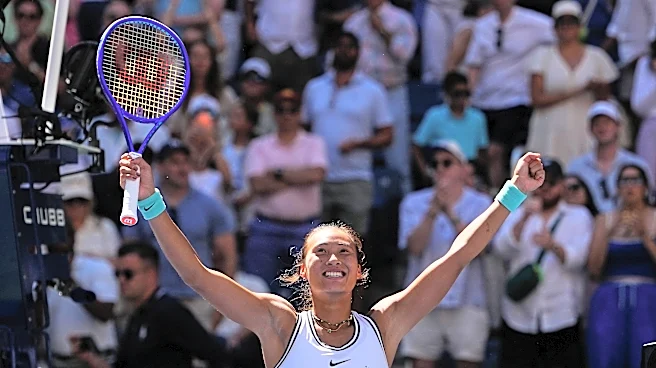

What's Happening?
American tennis player Madison Keys, 27, has achieved significant success on the global circuit, a journey largely attributed to the dedication and sacrifices of her parents, Richard and Lisa Keys. From Madison starting tennis at age four, her parents quickly
recognized her talent and committed to nurturing it. They relocated their family to Florida and Alabama to ensure she could train with top coaches and gain competitive experience. The Keys family estimates spending over $100,000 annually on tennis-related expenses, including travel, coaching fees, and equipment. Richard Keys even became a USA Tennis Coach to provide direct guidance. They also prioritized Madison's nutrition and physical well-being, working with trainers and a sports dietitian to optimize her performance. This comprehensive support system, built on coaching, parental sacrifice, nutrition, fitness, and emotional encouragement, has been fundamental to Madison's rise in professional tennis.
Why It's Important?
The story of Madison Keys highlights the immense financial and personal commitment often required from families to support aspiring athletes in highly competitive individual sports like tennis. The estimated annual expenditure of over $100,000 by the Keys family underscores the significant economic barrier to entry and sustained participation in professional sports, potentially limiting opportunities for talented individuals from less affluent backgrounds. This level of investment is not just monetary but also involves substantial time and lifestyle changes, such as relocating for training. The narrative also emphasizes the critical role of a strong support system, including dedicated coaching and a focus on holistic well-being, in an athlete's development. For the U.S. sports landscape, this illustrates the private investment that underpins the success of many American athletes on the international stage, often without direct public funding until later stages of their careers.
What's Next?
As Madison Keys continues her career, her family's foundational support will likely remain a significant, though perhaps less visible, factor. Her ongoing pursuit of higher achievements in professional tennis, as noted by her parents, suggests a continued commitment to her career. The success story of Keys and her family may serve as an inspiration and a model for other aspiring athletes and their families, demonstrating the potential rewards of long-term dedication and investment. Furthermore, the increasing visibility of athletes' support teams, such as coaches wearing sponsor apparel, indicates a potential shift in how endorsements and advertising integrate into the personal and professional lives of athletes and their entourages, potentially opening new revenue streams for the broader tennis ecosystem.
Beyond the Headlines
Beyond the immediate narrative of athletic achievement, Madison Keys' journey sheds light on the broader societal values placed on individual excellence and the lengths families will go to foster it. The sacrifices made by her parents, prioritizing her tennis career over material possessions, reflect a deep belief in their daughter's potential and a commitment to her dreams. This raises questions about the balance between parental support and pressure, and the psychological impact of such intense dedication on young athletes. It also subtly touches upon the commercialization of sports, where even coaches become avenues for advertising, indicating the pervasive influence of sponsorship in professional athletics. The story is a testament to the enduring power of family unity and belief in achieving extraordinary goals, while also implicitly highlighting the economic disparities that can shape access to such opportunities.