






What's Happening?
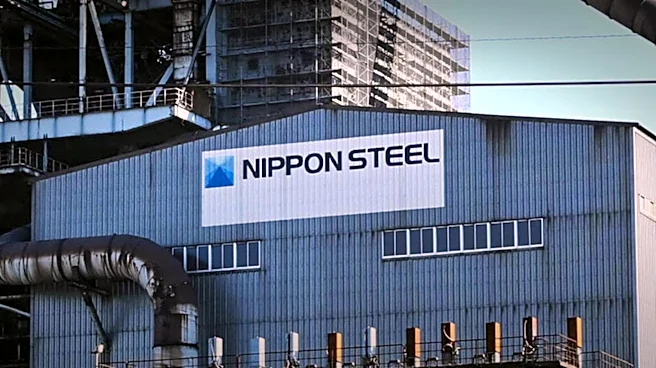
Nippon Steel, following its acquisition of U.S. Steel in 2025, plans to invest approximately $3 billion in the U.S. Steel-operated Mon Valley Works in Pennsylvania. This significant investment is earmarked for upgrading the plant’s hot rolling facility,
according to a report by the Nikkei newspaper. This move is part of Nippon Steel's broader commitment to invest $11 billion in U.S. Steel by 2028. The hot rolling equipment at Mon Valley, responsible for heating iron slabs from blast furnaces and rolling them into thinner steel, has been in operation for approximately 90 years. The planned upgrade aims to enhance the facility's capabilities, with the new equipment expected to become operational in the second half of 2029. This modernization is anticipated to enable the production of higher-quality steel. Nippon Steel had previously raised its fiscal 2026 earnings forecast in August, citing stronger U.S. Steel earnings and a robust steel market.
Why It's Important?
This $3 billion investment by Nippon Steel in the Mon Valley Works is critically important for the U.S. steel industry and the regional economy of Pennsylvania. The upgrade of a nearly century-old hot rolling facility signifies a major modernization effort that will improve efficiency, productivity, and the quality of steel produced. This directly impacts the competitiveness of U.S. steel in global markets, potentially strengthening domestic manufacturing capabilities and reducing reliance on imported steel. For the Mon Valley region, this investment secures jobs and demonstrates a long-term commitment from the new owners, alleviating concerns that often arise with foreign acquisitions. The ability to produce higher-quality steel can open new markets and applications, further bolstering the economic output of the plant. Furthermore, this investment aligns with Nippon Steel's larger pledge, indicating a strategic focus on enhancing U.S. Steel's assets and contributing to the overall health of the American industrial sector.
What's Next?
The next phase involves the detailed planning and execution of the hot rolling facility upgrade at the Mon Valley Works. With the new equipment slated to be operational by the second half of 2029, there will be a period of construction, installation, and testing. This process will likely involve significant logistical coordination and potential temporary adjustments to production schedules. Stakeholders, including local communities, employees, and industry analysts, will be closely watching the progress of this investment and its impact on plant operations and employment. The successful implementation of this upgrade is expected to lead to the production of higher-quality steel, which could influence U.S. Steel's market position and product offerings. Additionally, this investment is part of a larger $11 billion commitment by Nippon Steel, suggesting that further announcements regarding other U.S. Steel facilities may follow as the company continues its integration and modernization efforts across its newly acquired assets.
Beyond the Headlines
This substantial investment by Nippon Steel extends beyond a simple facility upgrade, touching upon broader implications for industrial policy, technological advancement, and international business relations within the U.S. The modernization of a 90-year-old facility underscores the need for continuous innovation and capital injection to maintain competitiveness in mature industries. It highlights the role of foreign direct investment in revitalizing American manufacturing infrastructure, particularly in sectors that have faced challenges from global competition. The commitment to producing higher-quality steel suggests a strategic shift towards value-added products, which can enhance the U.S.'s position in specialized markets. Ethically, this investment also raises questions about the balance between foreign ownership and national economic interests, particularly in critical industries like steel. The long-term success of this venture could serve as a case study for how international partnerships can contribute to the resilience and technological advancement of U.S. industrial capabilities, while also navigating the complexities of labor relations and community expectations.