




What's Happening?
South Sudan is actively seeking new energy investments to expand its oil production, develop exploration acreage, and strengthen its petroleum infrastructure. The country aims to increase crude output from approximately 174,000 barrels per day (bpd) to 230,000
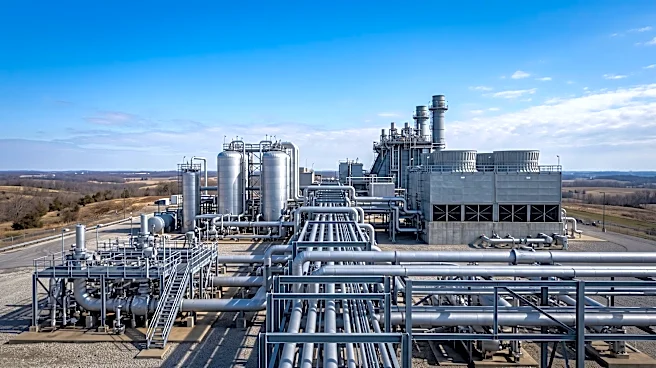
bpd in the near term. To facilitate this, the South Sudan Oil & Power (SSOP) conference is scheduled for November 24-25, 2026, in Juba. This event is designed to be a premier platform for investors, development finance institutions (DFIs), and project developers to secure funding, establish partnerships, and allocate capital across South Sudan's energy value chain. The nation has 14 exploration blocks available and possesses an estimated 3.5 billion barrels of proven oil reserves, indicating significant potential for new operators and technical partners to enhance production efficiency in existing fields and develop new ones. The investment pipeline includes exploration, enhanced oil recovery, refining, crude transportation, and power infrastructure.
Why It's Important?
This initiative is crucial for South Sudan's economic development, as the energy sector is a primary driver of its economy. Attracting new investment can lead to increased oil production, which directly translates to higher government revenues, enabling greater public spending on essential services and infrastructure. The expansion of petroleum infrastructure, including pipelines and refineries, will enhance the country's capacity to process and transport its oil resources, potentially reducing reliance on external processing facilities and increasing domestic value addition. Furthermore, the SSOP conference serves as a vital mechanism to connect South Sudan's energy projects with global capital, fostering international partnerships and technology transfer. The focus on upstream and downstream opportunities can create numerous job opportunities for the local population, contributing to economic stability and growth. The success of these investment drives could also position South Sudan as a more significant player in the regional and global energy markets.
What's Next?
The immediate focus is on the upcoming SSOP conference in November 2026, which is expected to be a pivotal event for South Sudan's energy sector. Following the conference, the government and national oil company, Nile Petroleum Corporation (Nilepet), will likely engage in follow-up discussions and negotiations with interested investors and partners. The establishment of the Africa Energy Bank, with $5 billion in authorized capital, is also a significant development, as it is expected to begin financing projects in 2027, potentially offering new funding avenues for South Sudan's petroleum projects. Nilepet is actively seeking strategic investment partnerships for refinery development and a proposed 350-kilometer crude pipeline. The country will also continue to pursue technical partners for its exploration blocks and mature fields. The success of these efforts will depend on the attractiveness of the investment climate, regulatory stability, and the ability to secure favorable financing terms.
Beyond the Headlines
Beyond the immediate economic implications, South Sudan's push for new energy investment carries broader significance. The country's efforts to expand its oil sector come at a time when global energy markets are navigating transitions towards cleaner energy sources. While South Sudan aims to maximize its hydrocarbon resources for economic development, there will be increasing pressure to consider environmental sustainability and responsible resource management. The involvement of development finance institutions and regional banks like the Africa Energy Bank could introduce new standards for project financing, potentially influencing environmental and social governance (ESG) practices within the country's energy sector. Furthermore, successful development of its energy infrastructure could enhance regional energy security and foster greater economic integration with neighboring countries, particularly through cross-border infrastructure projects like electricity interconnections. The long-term impact will depend on how South Sudan balances its development goals with evolving global energy trends and sustainability imperatives.