


What's Happening?
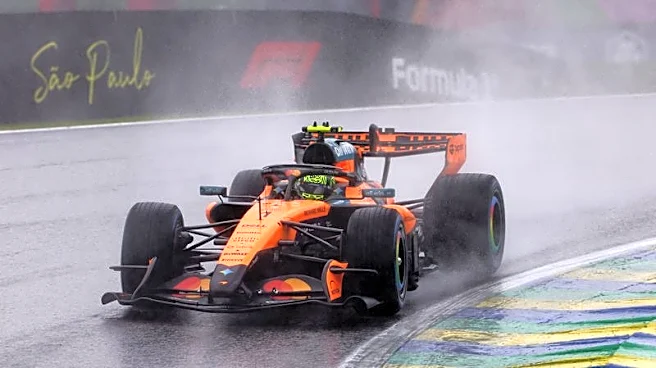
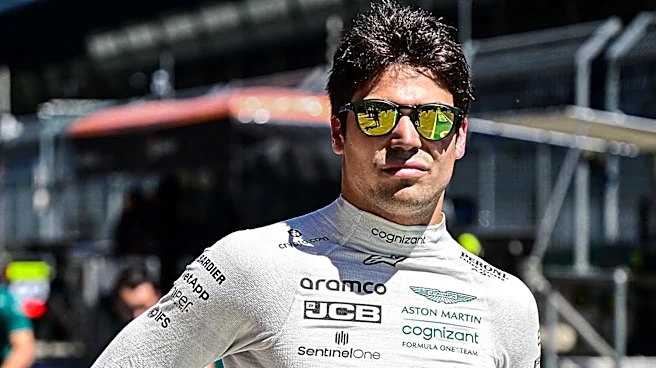
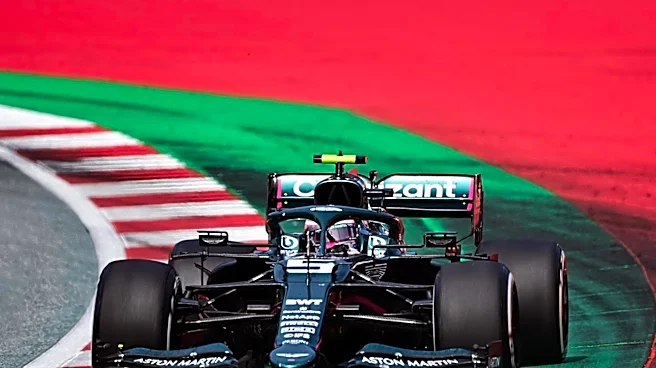
Lance Stroll, a Canadian Formula One racing driver for Aston Martin, was forced to retire from the São Paulo Grand Prix on Lap 30 due to a battery issue. This incident marks his seventh retirement in the last nine races, highlighting ongoing reliability
problems for his car. Honda, Aston Martin's power unit supplier, is investigating the energy recovery system (ERS) failure, suspecting it may be related to a problem encountered earlier in the Brazilian Grand Prix weekend. This retirement follows a challenging Mexican Grand Prix where both Aston Martin cars failed to finish due to ERS cooling circuit issues, despite Honda implementing countermeasures for the São Paulo race. Stroll started 16th on the grid and was running outside the points when his car lost power. His teammate, Fernando Alonso, finished 12th in the same race, showcasing improved cornering performance for Aston Martin but also a continued deficit in straight-line speed.
Why It's Important?
The recurring reliability issues with Lance Stroll's Aston Martin car, particularly the ERS failures, are significant for the team's performance and standing in Formula One. Consistent retirements hinder Aston Martin's ability to score points and compete effectively in the Constructors' Championship. For Honda, the power unit supplier, these failures raise questions about the robustness and competitiveness of their ERS technology, especially as they aim to provide reliable and powerful engines. The contrast between Aston Martin's improved chassis performance, as demonstrated by Fernando Alonso's qualifying and race pace in corners, and the persistent power unit reliability problems creates a critical imbalance. This situation could impact driver morale, team strategy, and future development plans, as the team needs to address these fundamental issues to build momentum for upcoming seasons and attract top talent.
What's Next?
Honda will conduct a thorough investigation into the ERS failure on Lance Stroll's car, analyzing data in the United Kingdom and Japan to determine the root cause before the next race in Las Vegas. The team aims to identify whether the issue is a recurrence of the cooling problems experienced in Mexico or a new, unrelated fault. Aston Martin will focus on improving car reliability, particularly for Stroll's vehicle, to ensure both cars can complete races and contribute to the team's points tally. The upcoming Las Vegas Grand Prix will be a crucial test for Aston Martin and Honda to demonstrate any progress in resolving these reliability concerns. Stakeholders, including team management, engineers, and drivers, will be working intensely to implement solutions and prevent further retirements in the final races of the season.
Beyond the Headlines
The persistent reliability issues faced by Lance Stroll's Aston Martin car could have broader implications for driver development and team dynamics. Frequent retirements can impact a driver's confidence and ability to gain consistent race experience, potentially hindering their performance trajectory. For Aston Martin, the challenge extends beyond immediate race results; it involves maintaining a reputation for engineering excellence and reliability, which is crucial for attracting sponsors and future talent. The ongoing ERS problems also highlight the complex interplay between chassis design and power unit integration in modern Formula One. Resolving these issues requires a cohesive effort between the team and its engine supplier, Honda, emphasizing the critical nature of their partnership. The situation could also influence strategic decisions regarding future power unit suppliers or internal engineering priorities within Aston Martin.