








What's Happening?
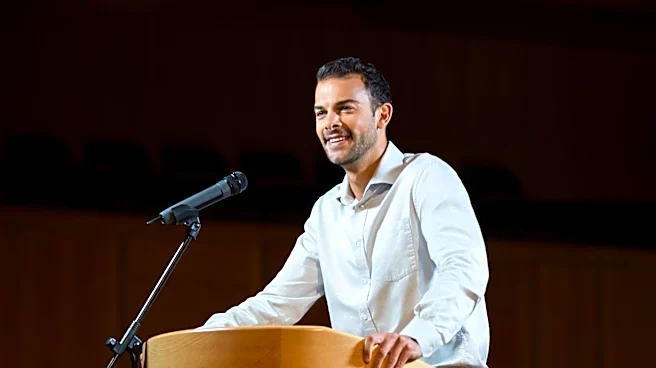
Aaron Michael Krinsky, a technology and healthcare investor, delivered a talk at TEDxBeverlyGrove 2026, focusing on the theme 'Reimagining the Possible.' Krinsky discussed the burdens of complexity in patient care, drawing from personal experiences with
his daughter's type 1 diabetes. He highlighted how the medical device ecosystem's complexity can persist beyond its usefulness, creating barriers to empathy and care. Krinsky shared insights from a conversation with a friend who managed diabetes using an open-source approach, which led to improved health outcomes. He advocated for simplifying care systems and called for a unified diabetes care device by 2030. Krinsky's career spans technology, design, and healthcare, and he has been involved in various innovative ventures.
Why It's Important?
Krinsky's talk underscores the challenges faced by patients and families navigating complex healthcare systems. His call for simplification could lead to more patient-centered care, potentially improving health outcomes and reducing stress for families. The discussion is relevant to broader sectors like education and finance, where complexity often hinders effective service delivery. Simplifying systems could enhance accessibility and efficiency, benefiting stakeholders across these industries. Krinsky's advocacy for innovation in healthcare aligns with ongoing efforts to integrate technology and patient care, highlighting the need for systemic change to prioritize patient needs over institutional complexities.
What's Next?
Krinsky's proposal for a unified diabetes care device by 2030 sets a clear goal for the healthcare industry. Achieving this would require collaboration among medical device manufacturers, healthcare providers, and policymakers to streamline technologies and regulations. The TEDx talk may inspire further discussions and initiatives aimed at reducing complexity in healthcare. Stakeholders might explore partnerships to develop integrated solutions that prioritize patient experiences. The broader implications could influence policy changes and encourage investment in patient-centered innovations, potentially transforming how healthcare is delivered and experienced.