





What's Happening?
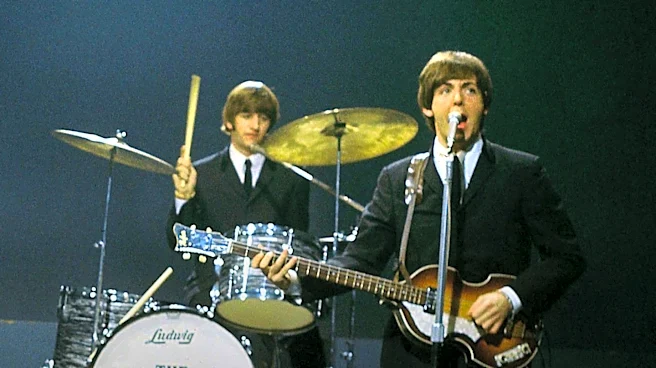
Paul McCartney played a crucial role in pushing The Beatles towards experimental and innovative songwriting in the mid-1960s, despite a common perception that he primarily wrote catchy pop songs. According to an article from Far Out Magazine, McCartney's
influence is evident in tracks like "Michelle," which he composed by drawing inspiration from Chet Atkins' finger-picking style. He aimed to create a song with a melody and a bass line simultaneously, a technique he considered an innovation for rock 'n' roll guitarists at the time. This forward-thinking approach was instrumental in developing the band's psychedelic and experimental offerings. His early contributions to the band's sound began even before their more widely recognized experimental albums like *Sgt. Pepper's Lonely Hearts Club Band* and *The White Album*, with his innovative ideas already present during the creation of *Rubber Soul* in 1965.
Why It's Important?
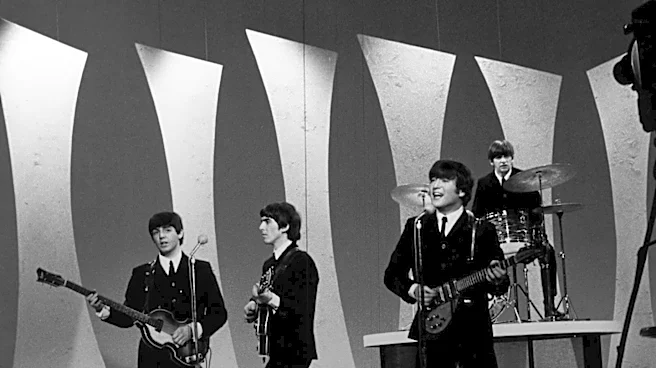
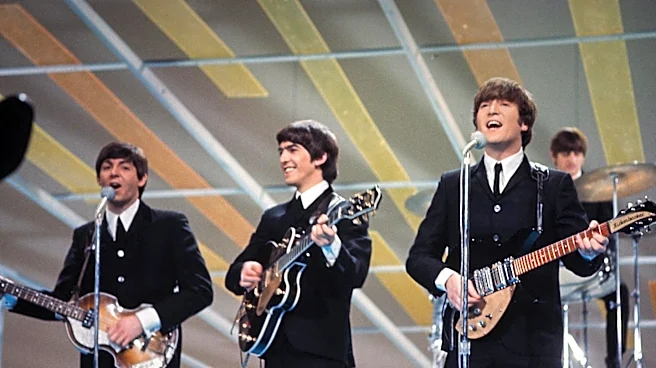
McCartney's experimental drive is important because it challenges the simplified narrative often presented about his role in The Beatles, particularly in contrast to John Lennon's perceived preference for more challenging music. This nuanced understanding highlights that McCartney was not solely responsible for the band's pop sensibilities but also a significant force behind their artistic evolution. His willingness to integrate diverse musical styles, such as jazz and country, into rock 'n' roll expanded the genre's boundaries and influenced countless musicians. This aspect of his work underscores the collaborative and multifaceted nature of The Beatles' creative process, demonstrating that both Lennon and McCartney contributed to the band's groundbreaking sound in different yet equally vital ways. Recognizing McCartney's experimental contributions provides a more complete picture of The Beatles' enduring legacy and their impact on music history.
What's Next?
While the immediate future holds no new developments regarding historical analyses of The Beatles, the ongoing re-evaluation of their individual members' contributions is likely to continue. Future musicologists and critics may further explore the interplay between McCartney's melodic genius and his experimental tendencies, potentially uncovering more examples of his innovative spirit. This continuous academic and popular discourse will likely lead to a richer understanding of The Beatles' creative dynamics and their lasting influence on popular music. Fans and scholars can anticipate new documentaries, books, and analyses that delve deeper into the band's songwriting processes and the individual roles played by each member in shaping their iconic sound.
Beyond the Headlines
The re-examination of Paul McCartney's experimental contributions extends beyond mere musical analysis; it touches upon the broader cultural phenomenon of how artists' legacies are constructed and sometimes oversimplified. The 'granny shit' myth, as described by Far Out Magazine, illustrates how initial perceptions or rivalries (like that between Lennon and McCartney) can shape public understanding for decades. This situation highlights the importance of revisiting historical narratives with fresh perspectives and comprehensive evidence to appreciate the full scope of an artist's work. It also underscores the ethical responsibility of critics and historians to avoid reductive labels and instead embrace the complexity of creative processes, ensuring that the full spectrum of an artist's influence is acknowledged and celebrated.