







What's Happening?
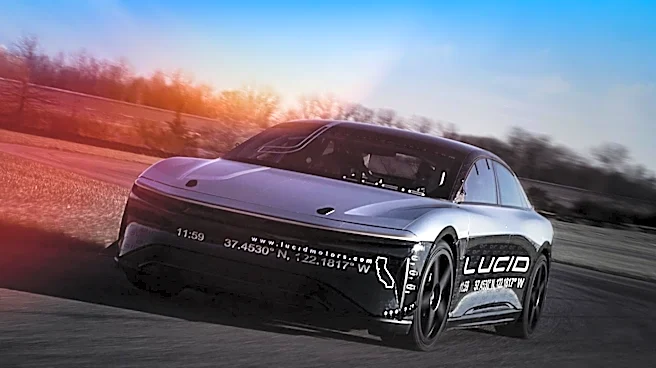
Lucid Group, an electric vehicle manufacturer, is experiencing significant financial pressure, leading to a substantial increase in its short interest. The company's stock has fallen by 67% this year and 82% over the last twelve months, with its market
capitalization now at $1.36 billion. Despite a rise in revenue, which reached over $405 million in the second quarter from $259 million in the same period last year, Lucid Group continues to incur substantial losses. The net loss in the last quarter was $1.03 billion, significantly higher than the $536 million loss in Q2 of the previous year. This financial strain has fueled speculation about the company's future, including rumors of potential bankruptcy or privatization, though management has stated it possesses sufficient liquidity for operations into the next year. The rising short interest, now at 23%, indicates a strong market expectation for further stock decline, making it the highest among American electric vehicle companies.
Why It's Important?
The situation at Lucid Group highlights the volatile and high-risk nature of the electric vehicle market, particularly for newer entrants. The company's substantial losses, despite revenue growth, underscore the immense capital requirements and operational challenges in scaling EV production. The rising short interest is a critical indicator of investor sentiment, suggesting a lack of confidence in Lucid's long-term viability and profitability. This could deter future investment and make it more difficult for the company to raise necessary capital, especially if its primary backer, Saudi Arabia, faces its own financial pressures. A potential short squeeze, while offering a temporary upside for some investors, would not address the underlying financial issues and could lead to further market instability. The outcome for Lucid Group could set a precedent for how the market evaluates and supports other emerging EV manufacturers, impacting investment strategies and the competitive landscape of the U.S. automotive industry.
What's Next?
Lucid Group's management anticipates its cash reserves will be depleted next year, necessitating a capital raise. The company may need to issue new shares to secure additional funding, which could further dilute existing shareholder value. The willingness of Saudi Arabia, Lucid's main backer, to continue investing is uncertain, given its own economic challenges and past investment setbacks. The high short interest in Lucid Group's stock creates a scenario where a short squeeze could occur, potentially causing a rapid, albeit temporary, increase in stock price. However, such an event would likely be driven by market dynamics rather than fundamental improvements in the company's financial health. Investors will closely monitor Lucid's next earnings reports for any signs of improved financial performance or concrete plans for securing future funding. The company's ability to manage its losses and demonstrate a clear path to profitability will be crucial for its survival and for regaining investor confidence.
Beyond the Headlines
The challenges faced by Lucid Group extend beyond immediate financial metrics, touching upon broader themes within the electric vehicle industry and global investment. The reliance on a single major international backer, Saudi Arabia, introduces geopolitical risks, as the backer's own economic and political stability can directly impact the company's funding. The high burn rate and persistent losses, even with increasing revenue, reflect the intense competition and high development costs inherent in the EV sector. This situation raises questions about the sustainability of business models that prioritize rapid growth and technological innovation over immediate profitability. Furthermore, the potential for a short squeeze, while a market phenomenon, underscores the speculative nature of investments in emerging technologies and the influence of market sentiment on company valuations. The long-term implications could include a consolidation within the EV market, where only the most financially robust or strategically backed companies survive, potentially limiting consumer choice and innovation in the future.