





What's Happening?
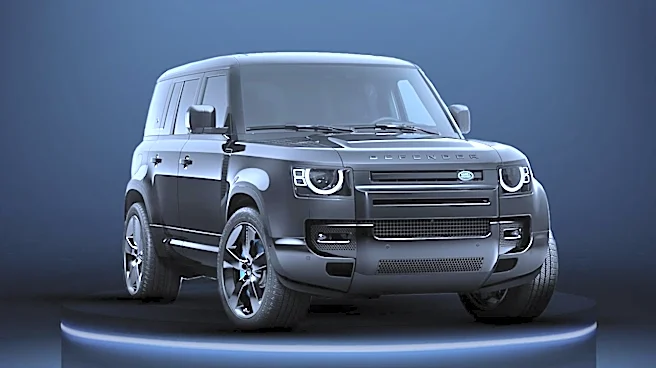
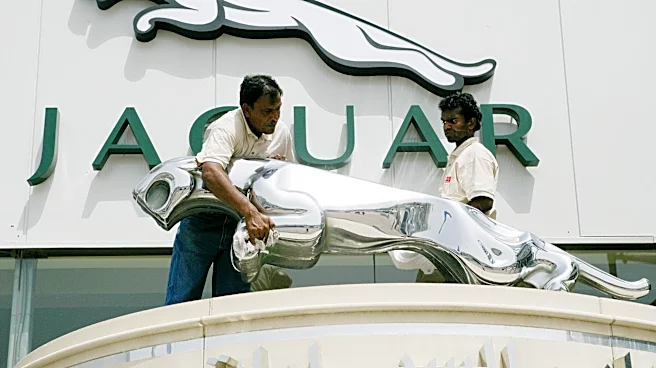
Jaguar Land Rover (JLR) recorded a pre-tax loss of £451 million (approximately $597 million) in the three months ending September 30. This financial downturn is largely attributed to a significant 46% drop in wholesales in China, where the Chery joint
venture ceased building JLR cars. The company's overall wholesales in China fell to 6,100 vehicles from 11,370 a year prior. This loss includes £530 million in exceptional items, covering restructuring costs, separation pay for departing staff, and write-downs of intangible assets under development. In response to these challenges, JLR announced plans on September 7 to eliminate approximately 4,000 roles worldwide over two years, aiming to save £1.7 billion (about $2.25 billion) and lower its breakeven volume to around 300,000 vehicles annually. The company also revised its fiscal year forecast, now expecting an adjusted EBIT margin of 2% to 3% and a free cash outflow of about £1.25 billion.
Why It's Important?
The financial struggles of Jaguar Land Rover, particularly the sharp decline in its China market, highlight the volatility and competitive pressures within the global automotive industry. For the U.S. market, JLR's increased reliance on North America, which accounted for approximately one-third of its wholesales, suggests that U.S. consumers will play a more critical role in the company's recovery. The company's strategy to introduce new electric vehicles, such as the Range Rover Electric, Range Rover Sport Electric, and Jaguar Type 01, starting in early 2027, indicates a significant shift towards electrification. This move is crucial for JLR to remain competitive and meet evolving consumer demands and regulatory standards. The job cuts and restructuring efforts are intended to improve efficiency and reduce the breakeven point, which could stabilize the company's financial health but also reflect a challenging period for its workforce.
What's Next?
JLR's immediate focus is on reversing its cash outflow, aiming to generate approximately £290 million between October and March to meet its revised fiscal year forecast. The company is banking on its upcoming electric vehicle lineup, including the Range Rover Electric, Range Rover Sport Electric, and Jaguar Type 01, with deliveries slated to begin in early 2027. The success of these new models will be critical for JLR's long-term financial stability and market position. The ongoing restructuring, including the 4,000 job cuts, will continue to impact the company's operations and workforce. JLR ended September with £1.8 billion in cash and £6.0 billion in total liquidity, providing some buffer to absorb further weak quarters. However, any delays in the launch or delivery of its new electric vehicles could severely jeopardize its recovery plans.
Beyond the Headlines
The challenges faced by Jaguar Land Rover underscore broader trends in the automotive sector, including the rapid transition to electric vehicles and the increasing importance of key markets like China. The company's decision to wind down its old Jaguar lineup ahead of the Type 01 launch means the brand currently has no new cars for sale, representing a high-stakes gamble on its future electric offerings. This strategy reflects a significant commitment to electrification but also carries substantial risks during the transition period. The impact of tariffs and trade deals, such as the U.S.-U.K. trade deal affecting U.K.-built cars and the U.S.-EU framework for European imports, will continue to influence pricing and market accessibility for JLR vehicles in the U.S. The company's ability to manage these geopolitical and market shifts, alongside its internal restructuring, will determine its long-term viability and competitiveness in a rapidly evolving global automotive landscape.