




What's Happening?
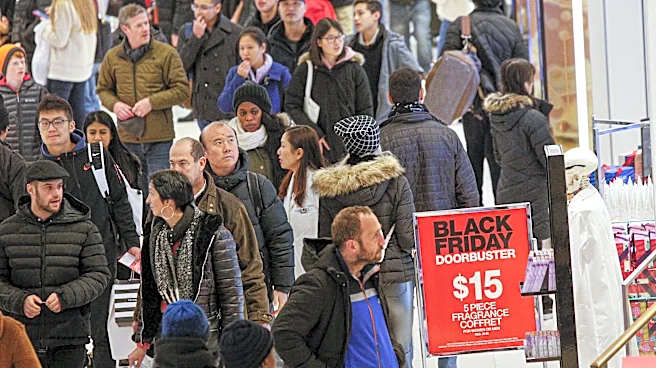
Black Friday deals have commenced, with major retailers such as Amazon, Best Buy, and Walmart offering significant discounts across various product categories. These early sales, which have expanded to cover most of November and are expected to extend
into early December, include price reductions on electronics like TVs, laptops, and headphones, as well as home goods and fashion items. Notable deals highlighted by CNET experts include a 60% discount on the TCL QM8L 4K Google TV, bringing the 65-inch model to $998, and a record-low price of $149 for Apple AirPods Pro 3. Additionally, the 13-inch Apple M5 MacBook Air is available for $1,049, a $250 reduction. Other discounted items range from Lego sets and smart home devices to kitchen appliances and personal care products, indicating a broad market engagement in pre-Black Friday promotions.
Why It's Important?
The early launch and extended duration of Black Friday sales signify a strategic shift in retail, aiming to capture consumer spending over a longer period rather than concentrating it on a single day. This trend benefits consumers by providing more opportunities to find deals and potentially spread out their holiday shopping expenses. For retailers, it helps manage inventory, reduce the intensity of single-day sales events, and potentially increase overall sales volume. The competitive landscape among major retailers like Amazon, Best Buy, and Walmart is intensified, as they vie for early market share. This extended sales period also impacts smaller businesses, which may struggle to compete with the deep discounts offered by larger corporations, potentially driving further consolidation in the retail sector. The focus on a wide array of products, from high-tech gadgets to everyday essentials, reflects diverse consumer demand and the broad economic impact of holiday shopping.
What's Next?
As Black Friday 2026 approaches on November 27, consumers can anticipate a continuation and potential intensification of deals from major retailers. The current trend suggests that many of the best offers may already be available, with new discounts likely to emerge closer to the official date and extending into Cyber Monday and the first week of December. Retailers will likely monitor sales performance closely, adjusting promotions based on consumer response and competitor actions. Shoppers are advised to track prices and compare offers across different platforms to ensure they are securing the best possible deals. The extended sales period also sets a precedent for future holiday shopping seasons, indicating that early and prolonged promotional activities may become the new norm for major retail events.
Beyond the Headlines
The expansion of Black Friday beyond a single day into a month-long event reflects a broader evolution in consumer behavior and retail strategy. This shift blurs the lines between traditional sales periods, potentially diminishing the unique allure of Black Friday itself. It also raises questions about the sustainability of such prolonged discount periods for retailers, particularly concerning profit margins and inventory management. From a consumer perspective, while more opportunities for savings are available, the constant barrage of deals can lead to decision fatigue and impulse purchases. The emphasis on online shopping, driven by the convenience of digital platforms, continues to reshape the retail landscape, impacting brick-and-mortar stores and necessitating innovative omnichannel strategies. This extended sales phenomenon underscores the dynamic nature of the U.S. retail market and its continuous adaptation to technological advancements and changing consumer expectations.