









What's Happening?
The Seamour Shavin House, the only home in Tennessee designed by the renowned architect Frank Lloyd Wright, has been listed for sale for the first time in its 75-year history. Located in Chattanooga, the house is priced at $1.6 million. Built in 1952,
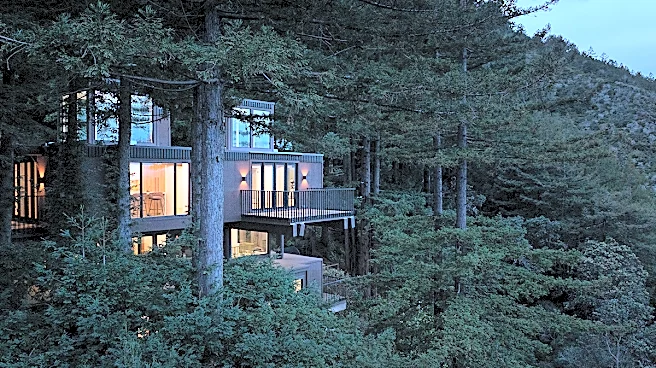
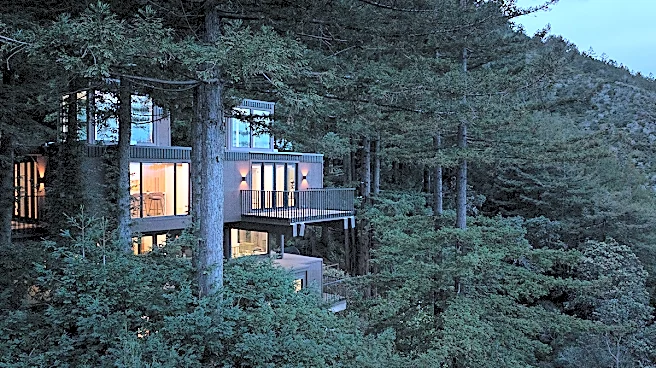
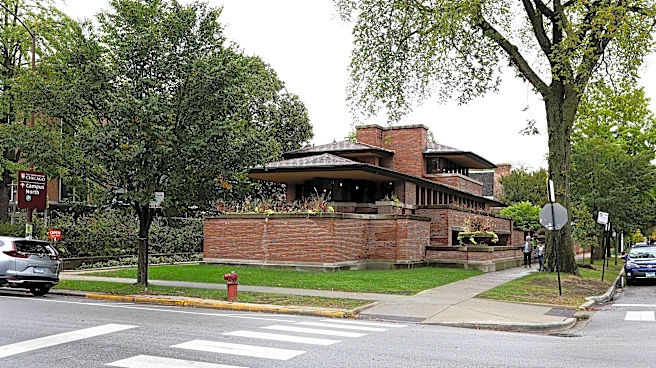
the home is a prime example of Wright's Usonian philosophy, which emphasizes harmony between architecture and nature. The property features over 1,700 square feet of living space, including three bedrooms and 2.5 bathrooms. It retains many of Wright's signature design elements, such as walls of windows, built-in furnishings, and a floor-to-ceiling stone fireplace. The house has remained in the same family since its construction, passing through several generations.
Why It's Important?
This listing represents a rare opportunity for architecture enthusiasts and collectors to own a piece of Frank Lloyd Wright's legacy. The Shavin House is not only a testament to Wright's innovative design principles but also a significant cultural artifact. Its sale could attract buyers interested in preserving architectural history, potentially influencing the market for historic homes. The property's unique design and historical significance may also increase interest in Wright's work and Usonian architecture, highlighting the importance of integrating buildings with their natural surroundings.
What's Next?
Potential buyers of the Shavin House may include collectors of architectural masterpieces or individuals interested in preserving historic properties. The sale could prompt discussions about the preservation of other Wright-designed homes and the broader implications for historic architecture. The new owner may choose to maintain the house as a private residence or open it to the public for educational purposes, further promoting Wright's architectural philosophy.
Beyond the Headlines
The sale of the Shavin House underscores the ongoing interest in Frank Lloyd Wright's work and the enduring appeal of his architectural philosophy. It highlights the challenges and opportunities associated with preserving historic homes, particularly those with unique design features. The listing also raises questions about the stewardship of architectural heritage and the role of private ownership in maintaining cultural landmarks.