



What's Happening?
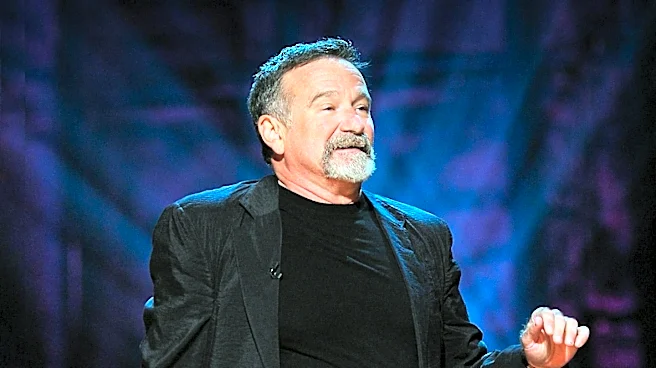
Actor Robin Williams reportedly quit his voice role as the titular character in the film 'Howard the Duck' approximately three days into production. His departure stemmed from frustration over creative limitations imposed during the voice recording process.
The puppet's mouth movements had already been filmed to match the puppeteers' initial, more subdued delivery of the lines. This pre-recorded animation made it impossible for Williams to utilize his signature improvisational style, which was a cornerstone of his comedic talent. The constraint effectively 'handcuffed' his ability to perform, leading to his decision to leave the project. This incident highlights a conflict between the technical demands of animation and the artistic freedom of a performer.
Why It's Important?
This event underscores the challenges and compromises often faced in film production, particularly when integrating voice acting with pre-existing animation. For the entertainment industry, it illustrates how technical decisions can inadvertently stifle creative input from renowned talents. Robin Williams was celebrated for his improvisational genius, and his inability to apply this skill to 'Howard the Duck' likely impacted the film's final comedic tone and reception. This situation also serves as a cautionary tale for studios regarding the importance of aligning creative processes to maximize the contributions of their talent, especially when working with actors known for their unique performance styles. The incident could have influenced future production methodologies in animated films, prompting more flexible approaches to voice recording.
What's Next?
While this event is historical, its implications for future productions involving voice actors and animation are ongoing. Studios continue to refine their workflows to better integrate the creative input of voice talent with animation processes. The industry has seen a shift towards more collaborative approaches, where voice actors might record lines before or concurrently with animation, allowing for greater spontaneity and character development. This incident likely contributed to a broader understanding within Hollywood of the need to balance technical requirements with artistic expression, particularly for actors whose performance relies heavily on improvisation. Future projects will likely continue to prioritize methods that allow voice actors more freedom to contribute their unique skills.
Beyond the Headlines
The departure of Robin Williams from 'Howard the Duck' due to creative constraints touches upon the broader theme of artistic control versus commercial and technical demands in Hollywood. It raises questions about the value placed on an actor's unique contribution versus the rigid adherence to production schedules and animation techniques. This incident could be viewed as an early example of the tension between traditional animation methods and the evolving expectations of voice acting as a distinct art form. It also highlights the potential for creative friction when a performer's established style clashes with a project's pre-defined parameters, ultimately affecting both the artistic integrity of the work and the morale of the talent involved. The story serves as a reminder of the delicate balance required to foster creativity within a highly structured industry.