




What's Happening?
China's economy experienced an unexpected slowdown in October, with key indicators falling below expert forecasts. Retail sales increased by only 0.4% year-on-year, significantly missing the 0.8% consensus. Industrial output growth also decelerated to 4.8%,
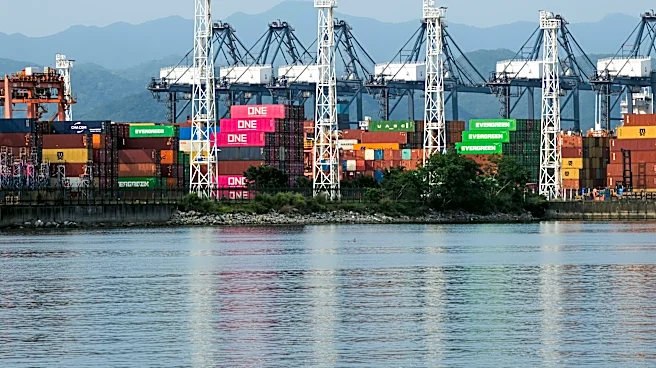
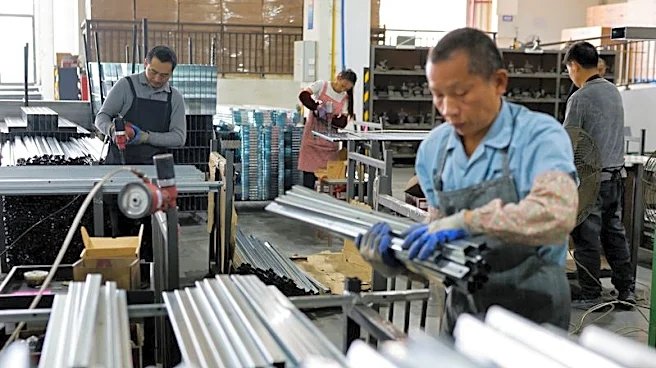
marking the first slowdown in three months. Furthermore, fixed-asset investment declined by 8.1% from January to October, a wider drop than the 7.2% recorded in the first nine months and below the anticipated 7.0% decrease. These figures suggest that recent stimulus measures implemented by Beijing have not yet translated into substantial economic recovery. The National Bureau of Statistics data indicates that while an AI-driven export boom has supported the economy, domestic demand remains weak, raising questions about the sustainability of growth reliant on exports. High-end and intelligent manufacturing contributed over half of the industrial output growth in the first ten months, masking weaknesses in traditional, domestically-focused industries.
Why It's Important?
The unexpected economic slowdown in China carries significant implications for the global economy, including the U.S. As the world's second-largest economy and a major trading partner for many nations, China's economic health directly impacts global supply chains, commodity prices, and international trade. A sustained period of weak domestic demand in China could reduce its appetite for imports, affecting U.S. exporters of goods and services. Furthermore, if China's economic challenges lead to increased reliance on exports, it could intensify trade competition and potentially exacerbate existing trade tensions with the U.S. and other countries. The data also highlights a potential imbalance in China's growth model, where strong manufacturing and exports might reduce the urgency for policymakers to address underlying issues in domestic consumption, such as a soft labor market and a prolonged property market slump. This could lead to a more volatile global economic environment, impacting investment decisions and market stability worldwide.
What's Next?
Economists are closely monitoring whether Beijing will introduce additional policy support to stimulate domestic demand, although current projections suggest no new significant stimulus measures are expected for the remainder of the year. The focus will likely remain on the impact of existing policies and the performance of the export sector, particularly in AI-related products. The Chinese government aims to achieve an annual GDP growth of 4.5%-5.0%, and the October data will be crucial in assessing the trajectory for the fourth quarter. International businesses and investors will be watching for signs of recovery in consumer spending and investment, as these will dictate future opportunities and risks in the Chinese market. The ongoing trade dynamics, especially regarding high-tech goods, will also be a key area of observation, as China's export strength continues to be a significant factor in its economic performance.
Beyond the Headlines
The persistent weakness in China's domestic consumption, despite an export boom, points to deeper structural issues within its economy. The reliance on exports, particularly in high-tech sectors, may create a dual economy where certain industries thrive while others, especially those tied to domestic consumer spending, struggle. This imbalance could lead to social and economic disparities within China, potentially affecting long-term stability. The property market slump and a soft labor market are significant contributors to subdued consumer confidence, suggesting that a fundamental shift in economic strategy might be necessary to foster more balanced and sustainable growth. The global implications extend beyond trade, as China's economic policies and performance can influence geopolitical dynamics, resource allocation, and the overall stability of the international financial system. The challenge for China's leadership will be to navigate these internal and external pressures while maintaining economic growth and social cohesion.