






What's Happening?
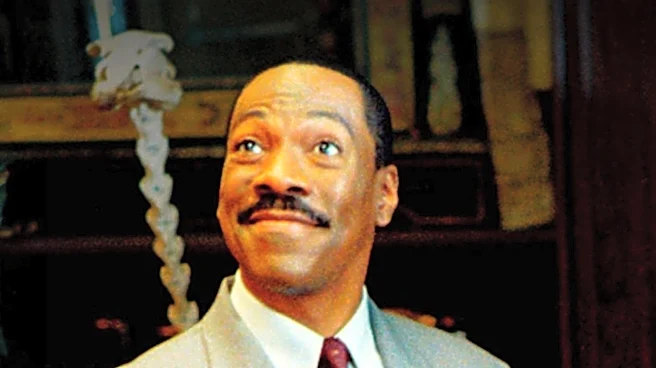
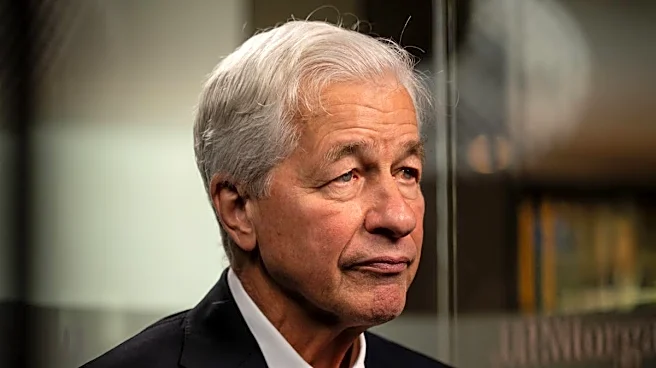
Despite public searches and a shared connection through financial legislation, comedian Eddie Murphy and JPMorgan Chase CEO Jamie Dimon are not related by blood or marriage. No documented family, business partnership, or friendship exists between the
two prominent New Yorkers. Eddie Murphy, 65, is a Brooklyn-born comedian and actor, while Jamie Dimon, 70, is the chairman and CEO of JPMorgan Chase. The primary reason for their names appearing together in searches is the 'Eddie Murphy Rule,' Section 746 of the Dodd-Frank Act, which was inspired by Murphy’s 1983 film 'Trading Places.' This rule, enacted in 2010, prohibits trading on nonpublic information misappropriated from a government source in commodity and futures markets. While Dimon has been a vocal commentator on various aspects of the Dodd-Frank Act, his criticisms have not specifically targeted Section 746. Their careers and personal lives have unfolded in distinct spheres, with Murphy shaping comedy and film, and Dimon leading a major U.S. bank.
Why It's Important?
The clarification regarding the non-relationship between Eddie Murphy and Jamie Dimon is important for dispelling misinformation and accurately understanding the origins and implications of financial regulations. The 'Eddie Murphy Rule' itself is a significant piece of legislation within the Dodd-Frank Act, designed to prevent market manipulation based on illicitly obtained government information. Its existence highlights how cultural references, even from popular films, can influence legislative language and public awareness of complex financial concepts. For financial markets, this rule reinforces the integrity of commodity and futures trading by criminalizing a specific type of insider trading. For the public, understanding the distinction between a celebrity's influence on a law's nickname versus their direct involvement in its creation helps to clarify the legislative process and the roles of various public figures in policy discussions. The ongoing debate surrounding Dodd-Frank, in which Dimon is a key voice, underscores the continuous evolution and scrutiny of financial regulations in the U.S. economy.
What's Next?
While there are no direct next steps concerning the relationship between Murphy and Dimon, both individuals continue to be active in their respective fields. Eddie Murphy is slated to appear in 'Shrek 5,' scheduled for release on June 30, 2027, and recently received the AFI Life Achievement Award in April 2026. Jamie Dimon is expected to remain as CEO of JPMorgan Chase for approximately three more years before potentially transitioning to executive chairman, with Doug Petno and Troy Rohrbaugh identified as leading internal candidates for his succession. The Dodd-Frank Act, which contains the 'Eddie Murphy Rule,' remains a subject of ongoing discussion and potential adjustments within financial regulatory circles. Future enforcement actions by the CFTC may continue to utilize the broader fraud authority under Dodd-Frank, sometimes loosely referred to by the 'Eddie Murphy Rule' label. The financial industry, under Dimon's leadership, will likely continue to engage in dialogue with regulators regarding the scope and impact of these regulations.
Beyond the Headlines
The 'Eddie Murphy Rule' serves as a fascinating example of how popular culture can intersect with complex legal frameworks. The fact that a comedic film like 'Trading Places' directly inspired a provision in a major financial reform act like Dodd-Frank illustrates the power of storytelling in highlighting real-world vulnerabilities. This connection also underscores the often-unseen influences on legislative drafting, where relatable scenarios can be used to explain and justify new regulations. Ethically, the rule addresses the principle of fair play in financial markets, aiming to prevent individuals from gaining an unfair advantage through misappropriated information. Legally, it expanded the scope of what constitutes illegal trading in commodity markets, reflecting a broader effort to close loopholes exposed by past financial crises. Culturally, the enduring recognition of the 'Eddie Murphy Rule' demonstrates how a memorable nickname can simplify and popularize an otherwise obscure legal concept, making it more accessible to the public and embedding it in the lexicon of financial regulation.