
What's Happening?
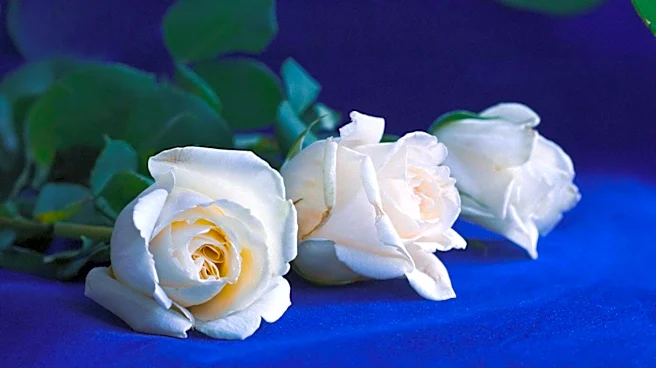
De Ruiter, a rose breeder, has introduced three new white rose varieties—Arctic White, Purezza, and Majestic White—to the U.S. market. These varieties, grown in Ecuador, offer distinct characteristics
in terms of head size, petal count, stem length, and vase life, catering to diverse floral design needs. Arctic White features a large head (6.7-7.2 cm) with 30-35 petals and a vase life of 10-12 days, making it suitable as a focal flower. Purezza boasts 43 petals on a 6.1-7.1 cm head and an extended vase life of 16 days, ideal for designs requiring volume and longevity. Majestic White, positioned between the other two, has a 6.0-7.0 cm head, 33 petals, and a 14-day vase life, designed for versatility in mixed arrangements. These introductions aim to provide floral professionals with more precise options for white roses, which are often treated as a single product despite varying requirements in design.
Why It's Important?
The introduction of these new white rose varieties by De Ruiter is significant for the U.S. floral industry, particularly for florists and event designers. White roses are a highly requested color in floral work, and these new options provide greater control over composition and design. For businesses, having roses with specific attributes like longer vase life (Purezza) can reduce waste and enhance customer satisfaction, especially for week-long installations or gift programs. The availability of varieties suited for focal points (Arctic White) or supporting roles (Majestic White) allows designers to achieve more nuanced and sophisticated arrangements, potentially leading to increased demand and market differentiation. This development also highlights the ongoing innovation in horticulture, where breeders continuously refine products to meet the evolving demands of the market, impacting supply chains and procurement strategies for U.S. floral businesses.
What's Next?
Floral professionals in the U.S. are expected to integrate these new white rose varieties into their designs, exploring their unique characteristics for various applications. The success of Arctic White, Purezza, and Majestic White will likely be measured by their adoption in bridal bouquets, event centerpieces, and retail bunches. De Ruiter will monitor market reception and feedback from designers to assess the performance and popularity of these new introductions. This could lead to further expansion of their cultivation or the development of additional specialized rose varieties. The increased choice in white roses may also influence purchasing trends among wholesalers and retailers, potentially shifting demand towards specific types based on their functional and aesthetic benefits. The company's focus on the U.S. market suggests a strategic effort to capture a larger share of the high-demand white flower segment.
Beyond the Headlines
Beyond the immediate commercial implications, the detailed differentiation of white rose varieties reflects a broader trend in consumer and professional markets towards customization and specialized products. This move away from generic offerings towards highly specific options underscores a growing appreciation for subtle distinctions in aesthetics and functionality within the floral industry. It also highlights the intricate science and artistry involved in horticulture, where factors like petal count, head size, and vase life are meticulously engineered to meet precise design requirements. This specialization could elevate the craft of floral design, encouraging more sophisticated techniques and creative expressions. Furthermore, the emphasis on specific characteristics for different design roles suggests a deeper understanding of how flowers interact within an arrangement, moving beyond mere color to consider form, texture, and longevity as critical elements of design.