






What's Happening?
Sumitomo Electric Industries, Ltd. has announced the development of a new technology for real-time monitoring of high-voltage direct current (HVDC) submarine cables that extend over 600 kilometers. This system is designed to detect external damage and
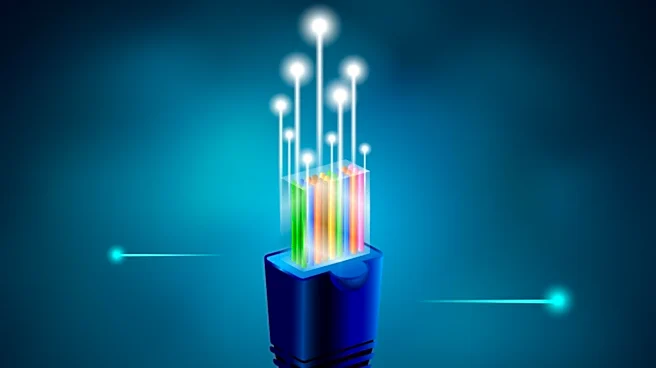
other anomalies early, addressing a critical vulnerability of long-distance subsea infrastructure. The technology combines Sumitomo Electric's ultra-low-loss optical fiber and erbium-doped fiber amplifier (EDFA) technologies with a commercially available Distributed Acoustic Sensing (DAS) system from AP Sensing GmbH. This innovation allows for continuous monitoring of the entire cable length by taking measurements from both ends of the circuit, significantly improving upon conventional methods that had limited accuracy and range. The achievement was recognized with the Best Paper Award in the B1 PS1 Category at the CIGRE Paris Session 2026.
Why It's Important?
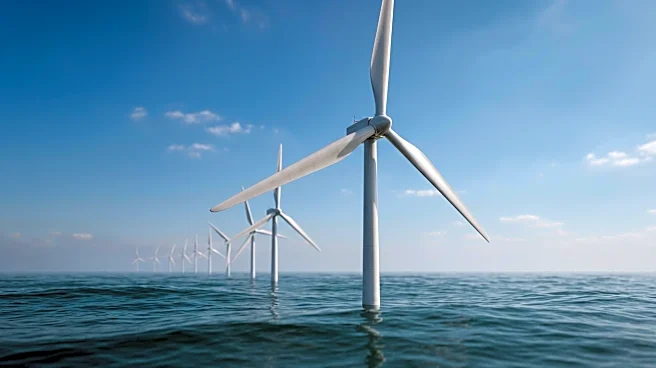
This development is crucial for the reliability and security of energy infrastructure, particularly as the expansion of renewable energy sources increasingly relies on long-distance HVDC submarine cables. These cables are vital for transmitting large capacities of power between geographically distant regions, making their protection against damage from ship anchors, fishing equipment, and other external factors paramount. The new technology's ability to accurately locate faults within 200 meters, a 33-fold improvement over previous methods, will drastically reduce power transmission downtime and repair costs. This enhanced visibility and early detection capability contribute significantly to energy security and the resilience of power infrastructure, which are growing concerns given the increasing number of incidents involving subsea cables.
What's Next?
Sumitomo Electric aims to promote the practical implementation of this submarine cable monitoring technology. The system's design, which places laser equipment and power supplies on land rather than on the seabed, enhances reliability and simplifies long-term maintenance. Further developments may include refining methods for identifying vessels based on their approach to cable infrastructure and their characteristic vibration signatures. The technology's proven track record, utilizing established components like ultra-low-loss optical fiber and EDFA, suggests a rapid path to widespread deployment. This will likely lead to increased adoption in new HVDC submarine cable projects and potentially retrofitting existing ones, ensuring greater protection for critical energy assets globally. The focus will be on integrating this monitoring into broader energy management systems.
Beyond the Headlines
The advancement in submarine cable monitoring has profound implications beyond immediate operational efficiency. It underscores a growing global concern for critical infrastructure protection in an era of increasing geopolitical tensions and reliance on interconnected energy grids. The ability to precisely detect and locate damage could deter malicious acts and enhance national security by safeguarding vital energy lifelines. Furthermore, this technology supports the broader transition to renewable energy by making long-distance transmission more viable and secure, thereby accelerating decarbonization efforts. The innovation also highlights the ongoing convergence of optical fiber communication and power transmission technologies, paving the way for more integrated and intelligent energy networks. This could lead to new standards for subsea cable deployment and maintenance, influencing international regulations and best practices for critical infrastructure.