









What's Happening?
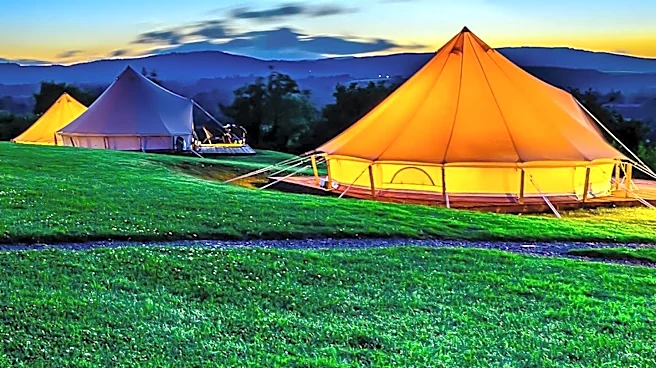
A Tiny House Resort located in South Cairo, New York, offers a unique travel experience with its 15 tiny houses on wheels set amidst the scenic Catskill Mountains. The resort, situated about two hours north of New York City, provides an escape for those
interested in alternative lifestyles and luxury travel. A recent visit highlighted the spaciousness of a 260-square-foot house, which can accommodate up to five people. The resort charges an average rate of $350 per night, although media rates may apply for certain stays. The tiny homes range from 100 to 400 square feet, and the resort is designed to appeal to those who appreciate natural settings and compact living spaces.
Why It's Important?
The growing interest in tiny homes reflects a broader trend towards minimalism and sustainable living. This resort caters to travelers seeking unique and immersive experiences, aligning with the increasing consumer preference for experiences over material possessions. The tiny house movement is part of a larger shift in the hospitality industry, where non-traditional accommodations are gaining popularity. This trend is significant for the travel and tourism sector as it adapts to changing consumer demands, particularly among younger travelers who prioritize authenticity and personalization in their travel experiences.
What's Next?
As the demand for unique travel experiences continues to rise, more resorts and hospitality providers may explore similar concepts, integrating tiny homes and other alternative accommodations into their offerings. This could lead to increased competition in the market, encouraging innovation and diversification in the types of experiences available to travelers. Additionally, the success of such resorts could influence urban planning and housing policies, as the appeal of tiny homes extends beyond vacation stays to permanent living solutions.
Beyond the Headlines
The popularity of tiny house resorts also raises questions about zoning laws and the environmental impact of such developments. As more people embrace tiny living, there may be a push for regulatory changes to accommodate these types of dwellings. Furthermore, the environmental benefits of smaller living spaces, such as reduced energy consumption and a smaller carbon footprint, could contribute to broader sustainability goals. This trend also highlights cultural shifts towards valuing simplicity and environmental consciousness in lifestyle choices.