







What's Happening?
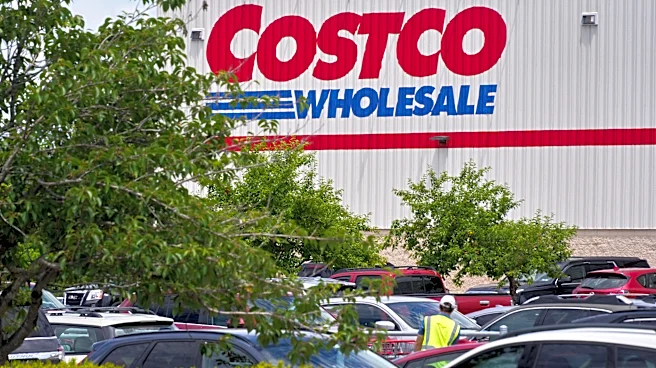
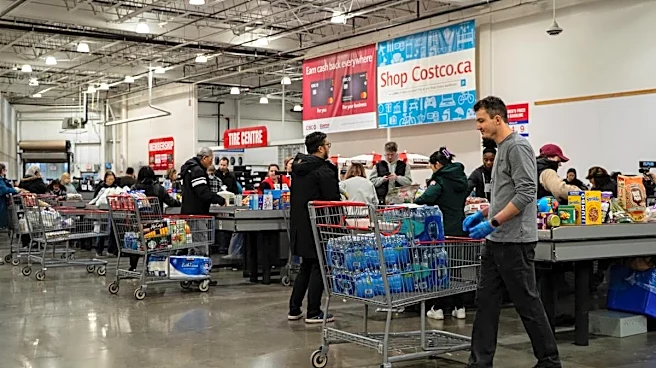
Costco, the wholesale warehouse giant, is increasingly serving as an unexpected 'third place' for social connection, helping to combat a national loneliness crisis in the U.S. Sociologists define 'third places' as community hubs outside of home and work
where people can build relationships. With traditional gathering spots like churches and civic clubs seeing declining attendance, and face-to-face socializing plummeting by 15% since 2003, Americans are actively seeking new avenues for belonging. Costco's accessible, low-cost, and low-pressure environment, coupled with its ubiquity and the tendency for shoppers to linger, makes it an ideal, albeit unconventional, social destination. Examples include the 'Men’s Mental Health Costco Club' and the 'Middle Tennessee Veterans Support Group' ('Camp Costco'), both of which utilize the warehouse for regular meetups and fostering camaraderie.
Why It's Important?
The emergence of Costco as a significant 'third place' highlights a profound societal shift and the urgent need for community in modern American life. The national loneliness crisis, evidenced by federal data showing a drastic reduction in daily in-person connection, has significant implications for public health, mental well-being, and social cohesion. Costco's role demonstrates how commercial spaces can inadvertently fill critical social voids when traditional institutions decline. This phenomenon is important because it reveals the adaptability of human social needs and the innovative ways individuals find connection. For businesses, it suggests that fostering a sense of community, even indirectly, can contribute to customer loyalty and engagement, as seen with Costco's membership-driven business model, where membership fees account for nearly two-thirds of its profits.
What's Next?
This trend could lead to other retail or commercial entities exploring ways to intentionally cultivate 'third place' attributes to attract and retain customers, and to address societal needs. Businesses might begin to design spaces or programs that encourage lingering, interaction, and community building, moving beyond purely transactional models. For example, Starbucks is already attempting to recapture its 'third place' roots with its 'Back to Starbucks' strategy, renovating cafes to be more inviting. Researchers may further study the characteristics that make certain commercial spaces effective 'third places' and how these can be replicated or enhanced. The success of groups like the 'Men’s Mental Health Costco Club' could inspire similar grassroots initiatives, leveraging accessible public spaces to address social isolation.
Beyond the Headlines
The transformation of a wholesale warehouse into a social hub speaks to deeper cultural and urban planning implications. The decline of walkable hubs in sprawling suburbs and the rise of digital interaction have contributed to the erosion of traditional community spaces. Costco's role as a 'third place' underscores the unintended consequences of modern development and lifestyle choices on social capital. It also raises questions about the nature of community in a consumer-driven society; is genuine connection possible amidst commercial transactions? The phenomenon suggests a fundamental human need for belonging that transcends economic activity, finding expression even in the most unexpected environments. This trend challenges us to reconsider how public and semi-public spaces are designed and utilized to foster human connection in an increasingly fragmented world.