





What's Happening?
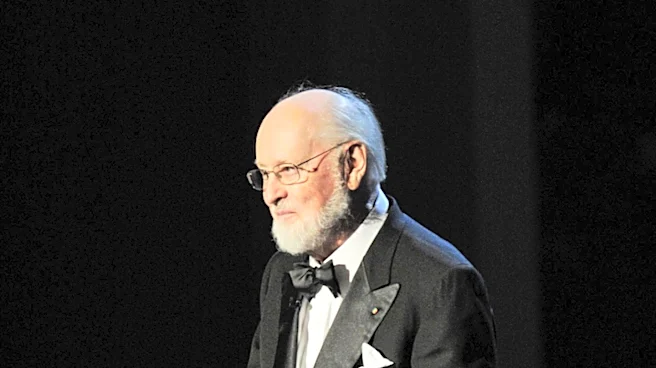
John Williams, an American composer, conductor, and pianist born on February 8, 1932, in New York, is widely celebrated for his extensive contributions to film scores and classical music. He is credited with revitalizing the symphonic film score, most
notably through his work on the 'Star Wars' saga. Over a career spanning more than sixty years, Williams has composed music for numerous iconic Hollywood films, including 'Jaws,' 'Home Alone,' 'E.T. the Extra-Terrestrial,' 'Indiana Jones,' 'Jurassic Park,' 'Superman,' 'Schindler's List,' and the first three 'Harry Potter' films. Beyond cinema, he has composed music for four Olympic Games, NBC Nightly News, President Barack Obama's inauguration ceremony, and various television series. Williams also served as the principal conductor of the Boston Pops Orchestra from 1980 to 1993 and has composed classical works for leading orchestras, such as a Horn Concerto for Dale Clevenger and the Chicago Symphony Orchestra.
Why It's Important?
John Williams's prolific career and distinctive musical style have profoundly influenced both the film industry and the broader musical landscape. His scores are integral to the cultural impact and enduring popularity of many blockbuster films, demonstrating the power of music to enhance storytelling and create memorable cinematic experiences. His ability to craft iconic themes has set a benchmark for film composers and continues to inspire new generations of artists. Furthermore, his classical compositions and tenure with the Boston Pops Orchestra highlight his versatility and commitment to diverse musical forms, bridging the gap between popular film music and traditional orchestral works. His numerous accolades, including five Academy Awards, four Golden Globes, seven BAFTA Awards, and 21 Grammy Awards, underscore his critical acclaim and significant artistic achievements, solidifying his status as one of the most influential composers in history.
What's Next?
While the source does not specify immediate future projects, John Williams's legacy is expected to continue influencing film scoring and orchestral music for years to come. His existing body of work will likely remain a staple in concert halls and film retrospectives, ensuring his compositions are introduced to new audiences. Future film composers will undoubtedly study his techniques and thematic developments, perpetuating his impact on the craft. Additionally, his classical pieces may see continued performances by orchestras worldwide, further cementing his place in the classical music canon. The ongoing appreciation for his work suggests that his compositions will be reinterpreted and celebrated, maintaining their relevance in both popular culture and academic musical studies.
Beyond the Headlines
John Williams's career transcends mere composition; it represents a significant cultural phenomenon. His music often evokes deep emotional responses and has become synonymous with specific cinematic moments, demonstrating the profound connection between sound and visual narrative. The widespread recognition of his themes, even by those unfamiliar with classical music, speaks to the universal appeal and accessibility of his work. His success also highlights the evolving role of orchestral music in contemporary media, proving that traditional forms can thrive in modern contexts. Williams's ability to consistently produce high-quality, memorable scores over decades underscores a rare blend of artistic genius and professional longevity, making him a unique figure whose contributions extend beyond entertainment into the realm of cultural heritage.