







What's Happening?
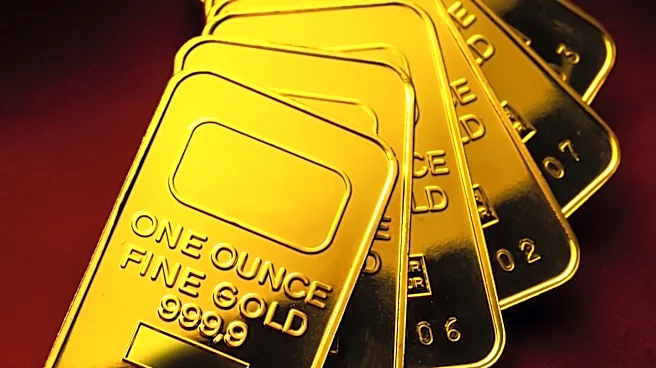
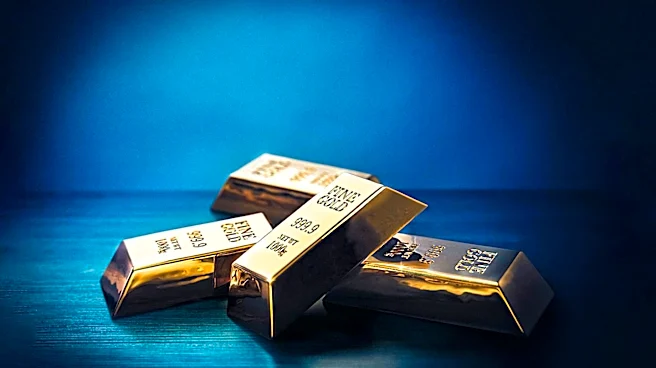
Private investor sentiment towards gold and silver has reached unprecedented levels of bullishness, according to a recent survey. The forecast predicts gold prices to reach approximately $4,665 per ounce and silver to hit $69.60 per ounce by the end of 2026.
This optimism is driven by factors such as monetary policy, which has overtaken geopolitics as the primary driver of precious metal prices. Institutional forecasts, such as those from J.P. Morgan, are even more optimistic, with predictions of gold reaching $6,000 per ounce. Despite this bullish sentiment, both metals are currently trading below their all-time highs, with gold down over 25% and silver more than 50% from their peaks.
Why It's Important?
The heightened bullish sentiment among private investors reflects a significant shift in how gold and silver are perceived in investment portfolios. The emphasis on monetary policy as a key driver suggests that investors are increasingly viewing these metals as hedges against central bank actions and geopolitical uncertainties. This shift could influence market dynamics, as retail investors typically weigh personal financial experiences and media narratives more heavily than institutional analysts, who rely on quantitative models. The divergence in forecasts between retail and institutional investors highlights differing expectations about industrial demand and monetary influences.
What's Next?
As the year progresses, the market will closely watch central bank policies and geopolitical developments, which are expected to significantly impact gold and silver prices. The wide range of institutional forecasts indicates substantial uncertainty, suggesting that market conditions could change rapidly. Investors will need to monitor these factors closely to adjust their strategies accordingly. The ongoing debate between the roles of gold and silver as monetary versus industrial commodities will also continue to shape market expectations and investment decisions.
Beyond the Headlines
The survey's findings underscore a broader trend of evolving investor attitudes towards precious metals. The reduced emphasis on inflation as a driver and the increased focus on monetary policy and government debt levels suggest a more nuanced understanding of gold's role as a reserve asset. This evolution in investor sentiment could lead to more stable demand for gold and silver, even in the face of market volatility. Additionally, the structural uncertainty reflected in the wide forecast ranges highlights the challenges in predicting market movements, emphasizing the need for investors to remain adaptable.