




What's Happening?
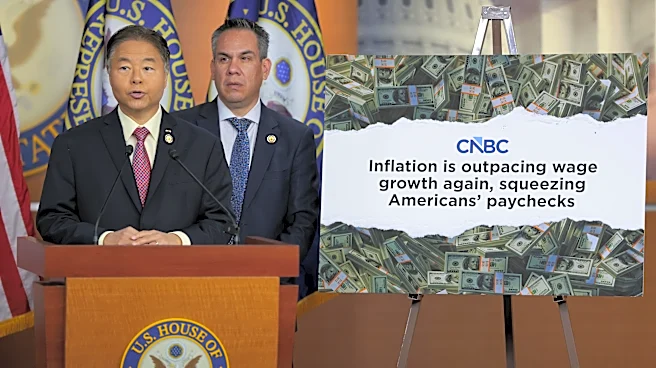
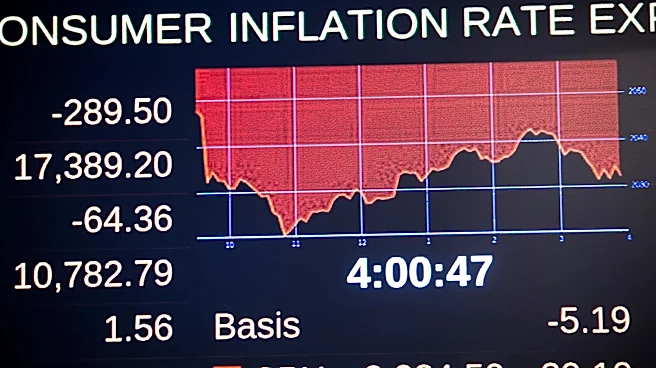
RBC Economics predicts a re-acceleration of inflation, with both headline and core Personal Consumption Expenditures (PCE) expected to rise by 0.3% month-on-month in October. This would push the year-on-year pace to 3.8% for headline PCE and 3.3% for core PCE.
While some inputs like Producer Price Index (PPI) for airfares and medical care services declined, the overall direction indicates increasing inflationary pressures. The report highlights that consumers are currently absorbing higher energy prices, as suggested by October's retail sales, but this is potentially at the cost of lower savings and increased personal interest payments. RBC Economics also notes that core PCE has outpaced core CPI for nearly a year, a rare divergence. The firm anticipates that the Federal Reserve may consider raising interest rates again in December if the reliance on consumer credit to support spending continues.
Why It's Important?
The projected re-acceleration of PCE inflation has significant implications for the U.S. economy and its consumers. A sustained rise in inflation erodes purchasing power, making everyday goods and services more expensive. The observation that consumers are maintaining spending by drawing down savings or increasing credit usage suggests a potential strain on household finances, which could lead to future economic instability. If the Federal Reserve acts on its readiness to raise interest rates in December, it would further increase borrowing costs for consumers and businesses, potentially slowing economic growth. The divergence between core PCE and core CPI also indicates underlying complexities in measuring inflation, which could influence policy decisions and market reactions. Businesses may face increased operational costs due to higher energy prices, potentially leading to further price increases for consumers.
What's Next?
The upcoming personal income and spending report from the Bureau of Economic Analysis (BEA) will be closely watched for signs of consumer stress, as inflation remains a primary concern. RBC Economics also anticipates a moderation in November job growth to 67,000, following a strong October. While sectors like transportation, warehousing, and healthcare are expected to contribute to hiring, weaknesses are projected in residential construction due to higher interest rates and in wholesale trade due to squeezed profit margins from elevated energy costs. The unemployment rate is expected to remain steady at 4.1%, supported by low layoffs and high worker retirements. The Federal Reserve's next move on interest rates will largely depend on these economic indicators, particularly the inflation data and consumer spending trends.
Beyond the Headlines
The persistent inflationary pressures and the reliance on consumer credit to maintain spending highlight a deeper economic challenge. This trend could exacerbate wealth inequality, as lower-income households are often more vulnerable to rising prices and higher interest rates. The shift in job creation towards goods-producing and trade-related sectors, while 'white collar' sectors experience job destruction, suggests a potential structural change in the labor market. While RBC Economics dismisses AI as the primary cause for 'white collar' job losses, the search for cost offsets to AI investment could be a contributing factor. This dynamic could lead to a re-evaluation of workforce development strategies and educational priorities to align with evolving economic demands.