

What's Happening?
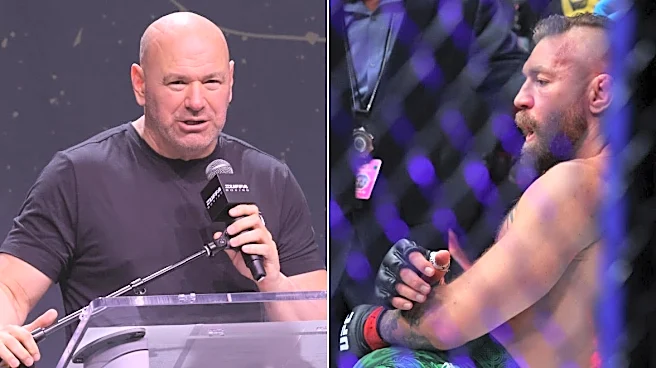
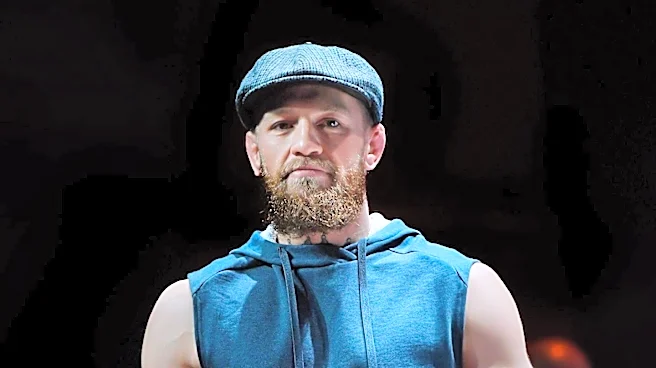
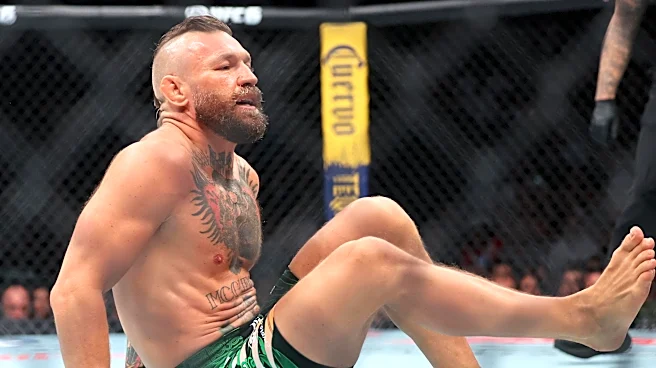
Conor McGregor's recent fight against Max Holloway at UFC 329 ended in disappointment as he suffered a right leg injury, forcing the bout to be stopped. This marks McGregor's second consecutive fight ending in a leg injury, following a previous incident
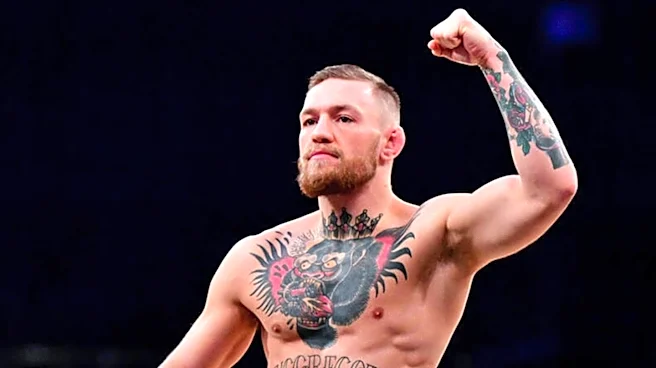
against Dustin Poirier. UFC CEO Dana White has confirmed that McGregor will be sidelined for at least a year to recover from a torn ACL and meniscus. McGregor has hinted that a potential trilogy fight with Holloway in 2027 could be his 'last dance' in the Octagon, raising questions about his future in the sport.
Why It's Important?
McGregor's injury and potential retirement have significant implications for the UFC and its fanbase. As one of the most recognizable figures in mixed martial arts, McGregor's presence in the UFC has been a major draw for audiences and a key driver of the organization's revenue. His absence and possible retirement could impact the UFC's ability to attract viewers and generate interest in future events. Additionally, McGregor's situation highlights the physical demands and risks associated with the sport, emphasizing the need for effective injury management and athlete support within the UFC.
What's Next?
As McGregor recovers from his injury, the UFC will need to consider how to navigate his potential absence and the impact on its event lineup. The organization may explore opportunities to promote other fighters and build new stars to maintain fan engagement. McGregor's recovery process will be closely watched, with updates on his progress likely to generate significant media attention. If McGregor decides to pursue a final fight with Holloway, it could serve as a major event for the UFC, drawing significant interest and potentially serving as a farewell to one of the sport's most iconic figures.