




What's Happening?
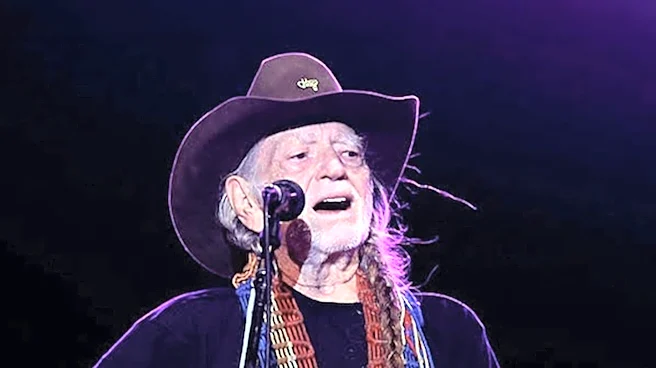
Willie Nelson made his debut on the Grand Ole Opry on November 28, 1964, marking a significant moment in his early career. Prior to this, Nelson had already established himself as a prolific songwriter, penning hits for other artists such as Patsy Cline's
'Crazy,' Faron Young's 'Hello Walls,' and 'Night Life' for Ray Price. He had also released some solo material. His Opry debut followed a new deal with RCA in 1964, urged by label head and producer Chet Atkins, which led to him recording 'Pretty Paper' at RCA Studio B. Nelson's performance at the Opry was well-received, leading him to become a regular performer. These early appearances were characterized by a more conventional country style, as Nelson attempted to conform to Nashville's expectations for a country star, a stark contrast to the 'Outlaw Country' image he would later cultivate.
Why It's Important?
Willie Nelson's Grand Ole Opry debut is a pivotal moment in country music history, illustrating the early stages of an artist who would become a legend. His initial attempts to fit into the Nashville establishment highlight the industry's traditional expectations during that era. This period of his career, though brief, provides crucial context for his later rebellion against the Music City machine and his eventual move to Austin in 1972, where he pioneered the Outlaw Country movement. Understanding his beginnings at the Opry helps to appreciate the artistic journey and evolution that led to his distinctive style and enduring influence. It also underscores the tension between artistic integrity and commercial pressures that many musicians face, particularly in a genre with strong traditional roots like country music.
What's Next?
While the article focuses on a historical event, Willie Nelson's legacy continues to evolve. His early Opry performances laid the groundwork for a career that would see him become one of country music's most iconic figures. Although he has not performed on the Grand Ole Opry stage in many years, his influence is still felt. The story serves as a reminder of the origins of a musical icon and the path he took to achieve his unique artistic identity. For contemporary artists, Nelson's journey offers a historical example of navigating industry expectations while ultimately forging an individual path. Discussions about his career often revisit these formative years to understand the roots of his 'outlaw' persona.
Beyond the Headlines
Willie Nelson's early career, particularly his time trying to conform to Nashville's norms, offers a deeper insight into the cultural and artistic landscape of country music in the mid-20th century. His eventual departure from Nashville and the embrace of the Outlaw Country movement represented a significant shift, challenging the polished, commercial sound that dominated the genre. This narrative is not just about one artist but reflects a broader artistic struggle for authenticity and creative freedom within a commercial industry. The contrast between his 'stylish' early image and his later long-haired, rebellious persona speaks to the transformative power of artistic self-discovery and the courage to defy expectations. His story continues to inspire artists who seek to break molds and define their own sound.