






What's Happening?
Peter Chauncy, an Australian farmer, has built a multi-million dollar firewood business after facing severe personal and environmental challenges. Originally enrolled in law school, Chauncy returned to his family's 670-hectare sheep and cattle farm in Canyonleigh,
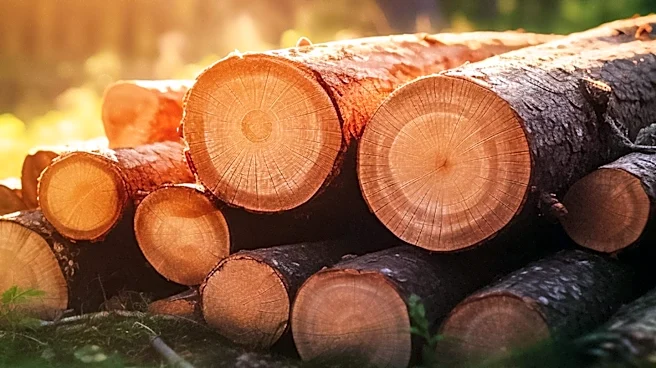
NSW, after his father fell ill and subsequently passed away. The farm then endured a devastating bushfire, followed by a four-year drought in the 1980s that crippled eastern Australia and led to significant financial hardship for his family. At 30, Chauncy started selling fallen timber from his property door-to-door in Sydney's wealthier suburbs to make ends meet. This initial side hustle rapidly grew, evolving from a small operation into a large-scale business that now sells approximately 1 million bags of firewood annually across four Australian states, servicing 3,000 locations. The business has adapted to changing demands, including a surge in sales during the pandemic due to increased use of fire pits.
Why It's Important?
This story highlights the resilience and entrepreneurial spirit that can emerge in the face of extreme adversity, offering a compelling example of how individuals can innovate and adapt to overcome significant economic and environmental setbacks. For U.S. businesses and entrepreneurs, it underscores the potential for niche markets and the importance of adaptability, even in traditional industries. Chauncy's success, despite challenges like the international fuel crisis and potential legislative changes regarding native forest logging, demonstrates that demand for essential goods, such as heating fuel, can remain robust. It also illustrates how a localized, resource-based business can scale significantly through strategic expansion and efficient logistics, transforming from a survival mechanism into a substantial enterprise. The narrative provides a case study in turning local resources into a widespread commercial success, offering lessons in market identification and operational scaling.
What's Next?
Chauncy's business faces potential future challenges, particularly if New South Wales follows Victoria and Western Australia in banning native forest logging. Such a ban would necessitate a significant shift in his timber sourcing strategy, although he currently relies on timber from private properties. Despite this, the business is experiencing 'record-breaking demand,' indicating continued strong performance in the near term. Chauncy remains committed to adapting to future obstacles, drawing on his history of overcoming adversity. The ongoing demand for firewood, even with the expansion of renewable energy, suggests a stable market for his product. His focus on family as a driving force indicates a continued dedication to the business's long-term sustainability and growth.
Beyond the Headlines
Beyond the immediate business success, Chauncy's story delves into deeper themes of personal sacrifice, resilience, and the profound connection between individuals and their land. His decision to abandon a legal career to support his family and his subsequent battle against natural disasters highlight a strong sense of duty and an unwavering determination. The transformation of a desperate door-to-door selling effort into a multi-million dollar enterprise speaks to the power of human ingenuity when confronted with existential threats. It also subtly touches upon the evolving relationship between traditional industries and environmental concerns, as his business navigates the complexities of timber sourcing amidst growing calls for conservation. This narrative underscores the ethical dimension of resource utilization and the long-term shifts in environmental policy that can impact even the most established businesses.