





What's Happening?
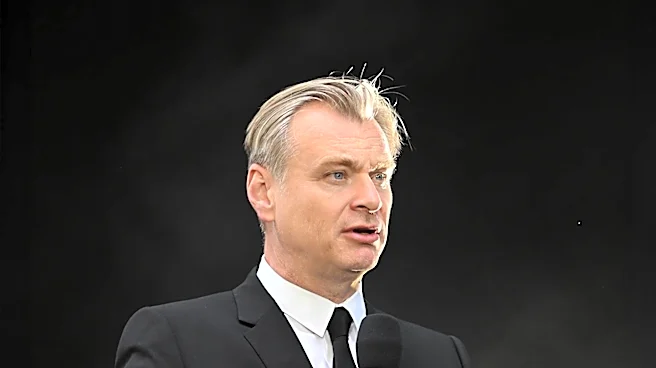
Christopher Nolan, the director known for films like The Dark Knight trilogy and Oppenheimer, has expressed his views on the rejection of artificial intelligence (AI) in filmmaking by younger audiences. In an interview with The Telegraph, Nolan discussed
the 'immediate and harsh' judgment of what he terms 'AI slop' by younger viewers. He noted that despite the push towards virtual environments in cinema, there is a growing interest in more tactile and real forms of storytelling. Nolan's upcoming film, The Odyssey, which is set to premiere on July 17, 2026, emphasizes practical effects, including a 60-foot Cyclops puppet. This approach contrasts with the increasing use of AI in the industry, which Nolan believes is being dismissed by the younger generation who are more familiar with the online world from which AI emerged.
Why It's Important?
Nolan's comments highlight a significant cultural shift in the film industry, where younger audiences are showing a preference for traditional filmmaking techniques over AI-driven content. This trend could influence future production decisions, as filmmakers may prioritize practical effects to cater to audience preferences. The rejection of AI by younger viewers suggests a potential reevaluation of the role of technology in storytelling, impacting how films are made and consumed. This shift could affect the economic dynamics of the film industry, as studios might invest more in practical effects and less in AI technologies, altering the landscape of film production and distribution.
What's Next?
As The Odyssey approaches its release, it will serve as a test case for the viability of practical effects in modern cinema. The film's success or failure could influence future projects and the industry's approach to AI. Filmmakers and studios may closely monitor audience reactions to determine the balance between traditional and digital techniques. Additionally, the ongoing debate about AI's role in creative industries is likely to continue, with stakeholders from various sectors weighing in on the implications for artistic expression and economic viability.