





What's Happening?
Apptronik, an AI-powered robotics company, has announced the expansion of its Robot Park in Austin, Texas, a facility dedicated to the data collection and training of humanoid robots. This expansion is part of a broader initiative to create a global network
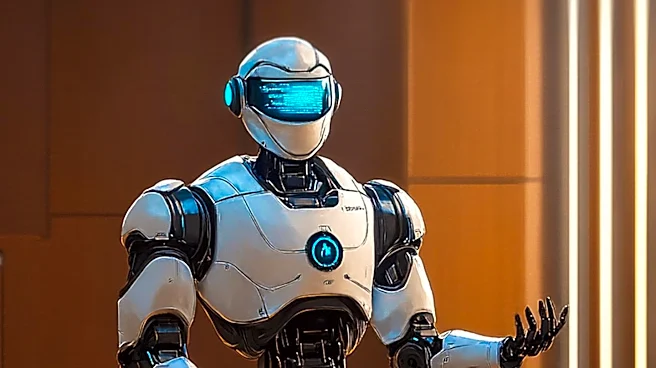
of Robot Parks at various customer and partner sites. The facility will utilize the Apollo 2 humanoid robot platform, available in both bipedal and wheeled configurations, to gather extensive real-world data across diverse tasks and environments. This data is crucial for training AI models that enable robots to operate autonomously. Apptronik's partnership with Google DeepMind plays a significant role in this process, as the data collected helps advance Google DeepMind's Gemini Robotics AI models. The initiative aims to transition from prototype demonstrations to real-world, deployable humanoid robots.
Why It's Important?
The expansion of Robot Park and the collaboration with Google DeepMind signify a major step forward in the development and deployment of humanoid robots. By focusing on real-world applications and continuous learning, Apptronik is addressing the industry's need for robots that can perform everyday tasks reliably. This development has the potential to impact various sectors, including logistics, manufacturing, and retail, by introducing automation solutions that can adapt to complex environments. The ability to collect and utilize large-scale data for AI training could lead to significant advancements in robot intelligence and functionality, potentially transforming industries that rely on manual labor and repetitive tasks.
What's Next?
Apptronik plans to open additional Robot Park locations in more cities, expanding its network and data collection capabilities. The company is also working on the next-generation Apollo 3, which will benefit from the data and insights gained from Apollo 2. As the technology evolves, stakeholders such as businesses in logistics and manufacturing may increasingly adopt humanoid robots to enhance efficiency and reduce operational costs. The ongoing partnership with Google DeepMind suggests continued advancements in AI models, which could further improve the capabilities and reliability of humanoid robots in real-world settings.