
What's Happening?
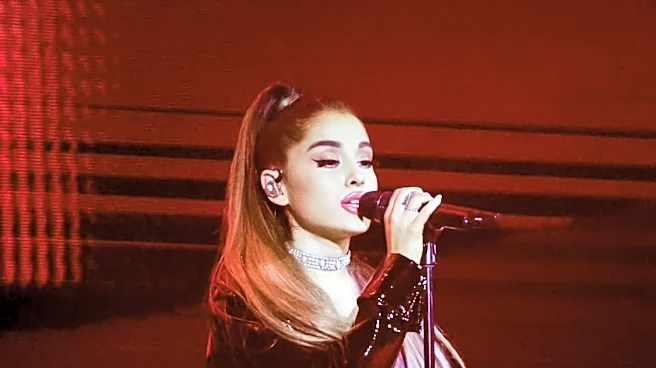
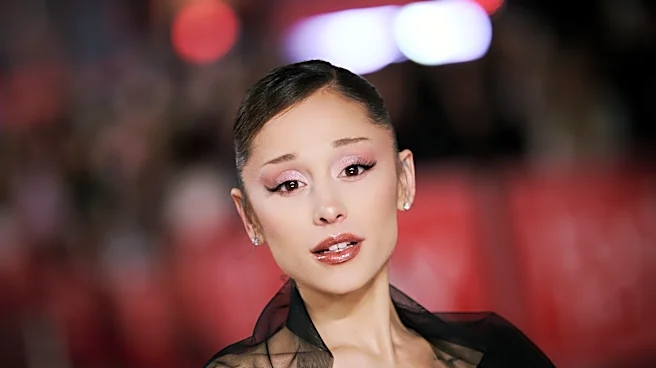
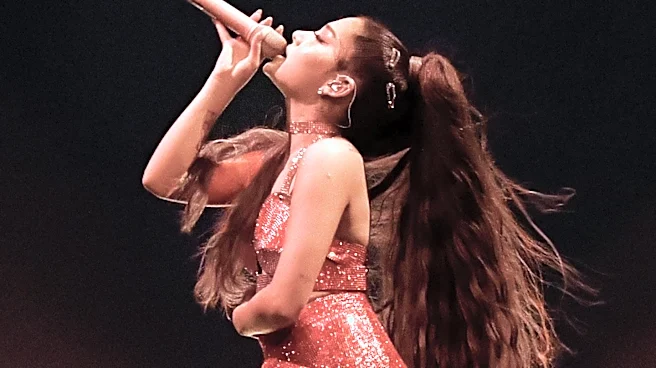
Ariana Grande has addressed the significant online discourse surrounding her 'Petal' music video, stating that the public's perception felt akin to an episode of 'Black Mirror'. During an appearance on the 'Las Culturistas' podcast with Bowen Yang and Matt
Rogers, Grande discussed the video for the title track of her eighth studio album, 'Petal'. She explained that her intention with the video was to share a vulnerable aspect of herself and her art. However, the subsequent public reaction, which heavily focused on her body and generated what she described as an 'insane perception,' deviated from her original artistic message. Grande noted the irony of the situation, where a video intended to comment on the distortion surrounding performance and art itself became subject to such distortion. She expressed pride in the project and stated she would not change anything about its release, despite the unexpected and bizarre reception.
Why It's Important?
This event highlights the complex relationship between artists, their work, and public perception in the digital age. Grande's comparison to 'Black Mirror' underscores a growing concern among public figures regarding how their artistic expressions are consumed and often distorted by online commentary. It reflects a broader societal issue where the internet can amplify interpretations that diverge significantly from an artist's original intent, sometimes overshadowing the art itself. For the entertainment industry, this raises questions about creative control, audience engagement, and the mental toll of constant public scrutiny on artists. It also points to the challenges artists face in conveying nuanced messages when online discourse can quickly become reductive or misinterpretive, impacting how their work is understood and valued.
What's Next?
While Grande has expressed pride in her work and stated she wouldn't change anything about the 'Petal' video's release, her comments suggest a continued reflection on the nature of public engagement with art. She previously announced a step back from public visibility after her 'Eternal Sunshine Tour' due to ongoing public scrutiny, indicating a potential shift in how she manages her public presence and artistic output. This situation may prompt other artists to consider new strategies for releasing and contextualizing their work to better control narratives and mitigate misinterpretations. The broader conversation about online discourse and its impact on artists is likely to continue, influencing how celebrities interact with social media and how media outlets cover their work.
Beyond the Headlines
Grande's experience touches upon deeper themes of authenticity, vulnerability, and the commodification of public figures in contemporary culture. Her desire to share a 'vulnerable thing' through her art, only for it to be met with what she perceived as a distorted and body-focused commentary, speaks to the persistent challenges women in the public eye face. It raises ethical questions about the responsibility of audiences and media in interpreting artistic expressions, particularly when personal narratives are involved. The 'Black Mirror' analogy suggests a critique of how technology and social media can create a hyper-real, often detached, environment where perception can become more impactful than reality, leading to a disconnect between creator and audience intent. This incident could contribute to a broader cultural dialogue about media literacy and the impact of online echo chambers on artistic reception.