



What's Happening?
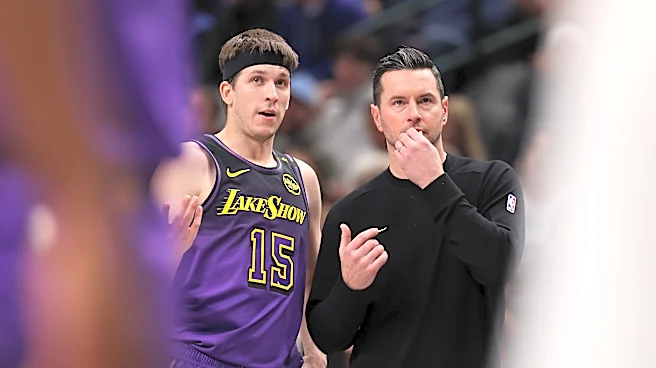
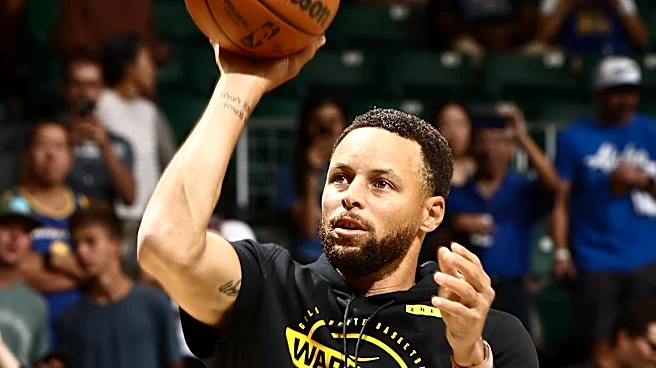
UCLA men's basketball coach Mick Cronin recently lauded Los Angeles Lakers guard Austin Reaves for his exceptional golf abilities, comparing him to NBA star Stephen Curry. Cronin, who occasionally plays golf with Reaves, stated that if any NBA player
is better or as good as Reaves at golf, it would only be Curry. Cronin also shared an anecdote about helping Reaves find golf courses in Los Angeles when Reaves first moved there, connecting him with a friend who introduced him to Riviera Country Club. Reaves, who recently signed a four-year, $184.7 million contract extension with the Lakers, is known for his strong performance on the court, averaging 23.3 points and 5.5 assists last season.
Why It's Important?
This story offers a glimpse into the personal lives and interests of professional athletes and coaches beyond their primary sports. It highlights the camaraderie and connections that can form within the sports community, even across different leagues and levels. For fans, it provides an interesting human-interest angle, showcasing a different side of a prominent NBA player. The comparison to Stephen Curry, widely regarded as one of the best golfers among professional athletes, underscores the high level of Reaves' talent in a recreational pursuit. This also subtly reinforces Reaves' growing profile as a notable figure in the NBA, extending his recognition beyond basketball performance.
What's Next?
While this is a lighthearted anecdote, it could potentially lead to more public interest in Reaves' golf game, perhaps even leading to charity golf events or further discussions about his skills. For Mick Cronin, it adds to his public persona as a coach who connects with his former players and maintains relationships. The story also subtly promotes the idea of athletes having diverse interests and talents outside their professional careers. It's unlikely to have any direct impact on Reaves' basketball career, but it contributes to his overall public image and fan engagement.
Beyond the Headlines
The narrative touches on the challenges athletes face in a new city, even with their resources, such as difficulty accessing public golf courses in Los Angeles. Cronin's assistance in connecting Reaves to a private club illustrates the informal networks that exist within elite circles. The coach's playful jab about Reaves being a 'ball hog' in golf, mirroring his on-court performance, adds a layer of personality and humor, humanizing both figures. Furthermore, Cronin's comment about Reaves' frugality despite his large contract offers a subtle commentary on financial responsibility, a topic often discussed in relation to professional athletes.