








What's Happening?
ADIPEC 2026, held in Abu Dhabi, brought together global leaders from energy, government, finance, and technology, including OpenAI CEO Sam Altman, to address critical issues shaping the global energy landscape. The conference focused on strengthening
energy security, infrastructure investment, the role of artificial intelligence (AI), and international partnerships to support future economic growth. H.E. Dr. Sultan Ahmed Al Jaber, UAE Minister of Industry and Advanced Technology and ADNOC Managing Director and Group CEO, emphasized the need for the global energy industry to fundamentally rethink how it builds, protects, and delivers secure energy, citing critical vulnerabilities exposed by recent disruptions. He outlined five steps for a more resilient energy system: accessible supply, robust routes to market, operational intelligence through intelligent energy systems, capital following confidence, and investing in people. Sam Altman highlighted the growing interdependence between AI and energy, noting that while AI can enhance energy efficiency, its rapid expansion will also demand significantly more energy.
Why It's Important?
The discussions at ADIPEC 2026 are highly relevant for the U.S. given its significant energy consumption, technological leadership, and global economic influence. The emphasis on strengthening energy security and resilient supply chains directly impacts U.S. national security and economic stability, particularly in light of global geopolitical shifts. The integration of AI into energy systems, as highlighted by Sam Altman, presents both opportunities and challenges for U.S. industries. AI can optimize energy operations and accelerate scientific discovery in energy, potentially leading to more efficient and sustainable energy solutions for the U.S. However, the increased energy demand from AI's rapid expansion necessitates strategic planning for U.S. energy infrastructure and resource allocation. U.S. companies and policymakers will need to consider these interdependencies to ensure a reliable, affordable, and sustainable energy future, while also maintaining a competitive edge in AI development and deployment. Investment in advanced logistics, strategic storage, and flexible refining capacity, as suggested by Dr. Al Jaber, could also inform U.S. energy policy and infrastructure development.
What's Next?
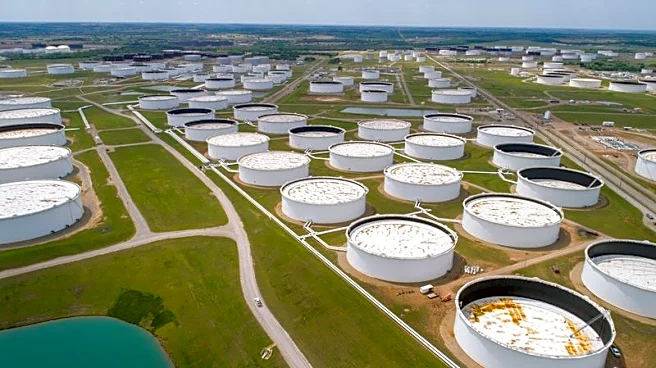
Following ADIPEC 2026, the global energy industry, including U.S. stakeholders, is expected to prioritize investments in resilient energy systems and advanced technologies. The focus will likely be on expanding strategic storage, improving logistics for energy distribution, and developing intelligent energy systems that leverage AI to anticipate risks and optimize performance. International partnerships will be crucial for building diversified and secure supply chains. The growing energy demands of AI will necessitate further research and development into energy-efficient AI technologies and sustainable power sources. Policymakers will likely explore frameworks that encourage capital investment in energy infrastructure while ensuring regulatory stability. The insights from ADIPEC will continue to shape strategic decisions and collaborations aimed at strengthening energy security and supporting economic growth in an increasingly complex global environment.
Beyond the Headlines
The convergence of energy and artificial intelligence, as discussed at ADIPEC 2026, presents profound long-term implications. The increasing energy demands of AI raise ethical questions about resource allocation and environmental impact, particularly if the energy sources are not predominantly renewable. This interdependence could accelerate the transition to cleaner energy if AI is effectively used to optimize renewable energy systems and develop new sustainable technologies. Conversely, it could exacerbate energy crises if not managed strategically. The call for 'intelligent energy systems' also hints at a future where energy grids are highly automated and interconnected, raising concerns about cybersecurity and the potential for systemic vulnerabilities. Furthermore, the emphasis on 'people' as the most important factor underscores the human element in managing complex energy systems and the need for skilled workforces to navigate these technological shifts. This highlights the critical importance of education and training to prepare for the evolving energy and AI landscape.