

What's Happening?
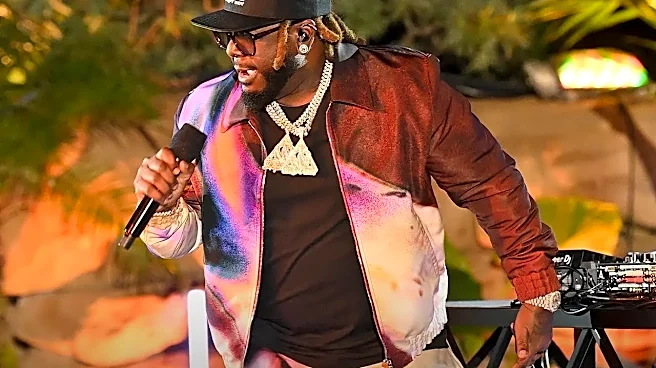
Moroccan-American rapper French Montana, born Karim Kharbouch, recently performed at the Royal Stag BoomBox in Hyderabad. With a career spanning over two decades, Montana is known for chart-topping hits like 'Unforgettable,' 'No Stylist,' and 'Pop That,'
and albums such as 'Jungle Rules,' 'Montana,' and 'They Got Amnesia.' During his visit, he shared his perspectives on the current state of rap music, emphasizing the rapid changes driven by social media trends. He noted that while new trends emerge daily, 'golden music lasts forever,' suggesting a focus on enduring quality over fleeting popularity. Montana also highlighted the shift in artist development within the industry, contrasting it with past practices that he believes were more effective in creating 'superstars.'
Why It's Important?
French Montana's observations shed light on significant shifts within the U.S. music industry, particularly in the rap genre. His comments about the ephemeral nature of social media trends versus the lasting impact of 'golden music' underscore a broader debate about artistic integrity and commercial viability. For emerging artists, this perspective suggests a challenge in balancing immediate viral success with building a sustainable career. The emphasis on 'artist development' is crucial for record labels and management companies, as it points to a potential decline in nurturing long-term talent in favor of quick returns from trend-driven acts. This could impact the diversity and longevity of musical careers, potentially leading to a more transient music landscape where artists struggle to maintain relevance beyond a few viral moments. The discussion also highlights the global reach of U.S. hip-hop, as Montana's performance in Hyderabad demonstrates its international appeal and influence.
What's Next?
The conversation around artist development and the impact of trends is likely to continue shaping strategies within the music industry. Record labels and artists may re-evaluate their approaches, potentially investing more in long-term talent cultivation rather than solely chasing viral sensations. This could lead to a resurgence of more traditional artist development programs, focusing on honing craft and building a lasting artistic identity. For consumers, this might mean a shift towards music with more depth and longevity, moving away from content designed purely for short-term engagement. French Montana, through his continued work and influence, may further advocate for these changes, potentially inspiring other established artists to mentor new talent and promote a more sustainable model for success in the rap industry.
Beyond the Headlines
Beyond the immediate concerns of music trends and artist development, French Montana's comments touch upon the broader cultural implications of social media's dominance. The rapid cycle of trends can foster a 'disposable' culture, where content is consumed and discarded quickly, potentially diminishing the value placed on enduring artistic creations. This phenomenon extends beyond music, affecting various forms of media and entertainment. The challenge lies in how to leverage the reach of social media for promotion while simultaneously cultivating a body of work that transcends fleeting popularity. This also raises questions about the role of algorithms in shaping cultural tastes and whether they inadvertently prioritize novelty over substance. Ultimately, the discussion points to a need for a more balanced approach that values both innovation and timeless quality in the digital age.