




What's Happening?
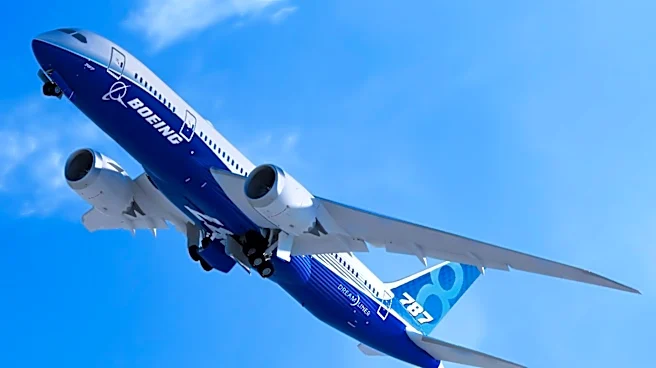
The Boeing 787 Dreamliner has significantly transformed long-haul commercial aviation since its introduction in 2011. This aircraft, primarily constructed from composite materials, prioritizes fuel efficiency, passenger comfort, and operational flexibility.
It comes in three variants—the 787-8, 787-9, and 787-10—catering to diverse route profiles and passenger capacities, ranging from 200 to 375 passengers. Key innovations include a cabin altitude equivalent to 6,000 feet, higher humidity levels, and larger, electronically dimmable windows, all designed to enhance passenger well-being and reduce jet lag. The 787's advanced aerodynamics and fuel-efficient engines, such as the GE GEnx-1B and Rolls-Royce Trent 1000, contribute to a 20-22% fuel savings compared to its predecessors. Despite initial challenges with battery incidents and manufacturing quality control, the Dreamliner has accumulated millions of safe flight hours and continues to be a cornerstone of global airline fleets, enabling over 550 new nonstop city pairs.
Why It's Important?
The Boeing 787 Dreamliner's impact extends beyond its technological advancements, fundamentally reshaping global air travel and airline economics. Its fuel efficiency and long-range capabilities have made previously unviable direct routes between secondary cities economically feasible, reducing reliance on congested hub-and-spoke systems. This has significant implications for business and leisure travelers, offering more direct and time-saving itineraries. For airlines, the 787's operational flexibility and lower fuel consumption translate into reduced operating costs and increased profitability on competitive routes. The enhanced passenger comfort features, such as lower cabin altitude and higher humidity, address common complaints of long-haul travel, potentially improving passenger satisfaction and loyalty. The aircraft's design also sets new industry standards for composite material use and electrical systems, influencing future aircraft development and regulatory frameworks for aviation safety and environmental performance.
What's Next?
Boeing continues to address quality control challenges and implement process improvements in the 787 production line, with ongoing efforts to enhance supplier audits and inspection protocols. The company's ecoDemonstrator program utilizes 787 airframes to validate new technologies, including sustainable aviation fuel (SAF) compatibility and advanced noise reduction modifications, indicating a future focus on environmental sustainability. Airlines are increasingly operating 787s on higher blends of SAF, aligning with global efforts to reduce carbon emissions in the aviation sector. Future developments may include larger one-piece composite wings and hybrid material approaches. The 787's evolution will likely continue to influence industry-wide standards for aircraft design, manufacturing, and operational efficiency, with a strong emphasis on environmental performance and passenger experience as key drivers for innovation.
Beyond the Headlines
The Boeing 787 Dreamliner represents a significant shift in aviation philosophy, moving towards a more passenger-centric and environmentally conscious design. The emphasis on reducing jet lag through cabin pressurization and humidity control highlights a deeper understanding of human physiology in long-duration flights. The widespread adoption of composite materials, while presenting initial manufacturing hurdles, signifies a long-term commitment to lighter, more fuel-efficient aircraft, pushing the boundaries of aerospace engineering. The challenges faced with battery incidents and quality control underscore the complex interplay between innovation, safety, and regulatory oversight in a highly scrutinized industry. Furthermore, the Dreamliner's role in enabling direct flights between secondary cities has broader societal implications, fostering new economic connections and cultural exchanges by making global travel more accessible and less arduous for a wider range of travelers.